


7 Steps to Check Shipping Speed for Camping Gear
Last Updated: November 10, 2026
Quick Summary
To check shipping speed for camping gear, read the retailer's shipping policy for handling time, cutoff time, and transit time, then add handling and transit days to your order date, counting business days only. Once ordered, use the tracking number in your shipment notification to confirm the real ship date and estimated delivery.
- An order placed after the daily cutoff rolls to the next business day, even if it's 9 a.m. on a Tuesday.
- Your arrival date equals the ship date plus transit time, counted in business days only.
- For a Friday departure with 3-day transit and 1-day handling, order by Monday of that week at the latest.
- If tracking shows label created for two days, the carrier hasn't picked it up yet, so call the retailer.
- Domestic warehouse shipping skips customs and moves on a predictable business-day schedule.
Table of Contents
- Why Shipping Speed Matters Before Your Trip
- Step 1: Find the Retailer's Shipping Policy and Cutoff Times
- Step 2: Calculate Your Estimated Delivery Date
- Step 3: Check an Existing Order's Shipping Speed
- Step 4: Match the Shipping Method to Your Gear
- Camping Gear Shipping Lead Times by Product Type
- How to Avoid Shipping Delays for Camping Gear
- Domestic Warehouse Shipping Benefits for Faster Delivery
- Frequently Asked Questions
Why Shipping Speed Matters Before Your Trip
A tent that arrives the day after you leave is a tent you paid for and can't use. That's why knowing how to check shipping speed for camping gear matters more than almost any other part of ordering online. FieldToStream is a veteran-owned shop that stocks gear in U.S. warehouses, and we've watched too many campers get burned by vague delivery windows. Below, we'll walk you through seven steps to confirm exactly when your order lands, from reading a shipping policy to tracking a live package.
Step 1: Find the Retailer's Shipping Policy and Cutoff Times
The fastest way to check shipping speed is to read the shipping policy page before you add anything to your cart. Look for three numbers: handling time, cutoff time, and estimated transit time.
Handling time is how long the warehouse takes to pick and pack your order. Transit time is how long the carrier takes after pickup. A "ships in 1-2 business days" line refers to handling, not delivery.
Cutoff times decide everything. An order placed after the daily cutoff rolls to the next business day, even if it's 9 a.m. on a Tuesday.
Step 2: Calculate Your Estimated Delivery Date
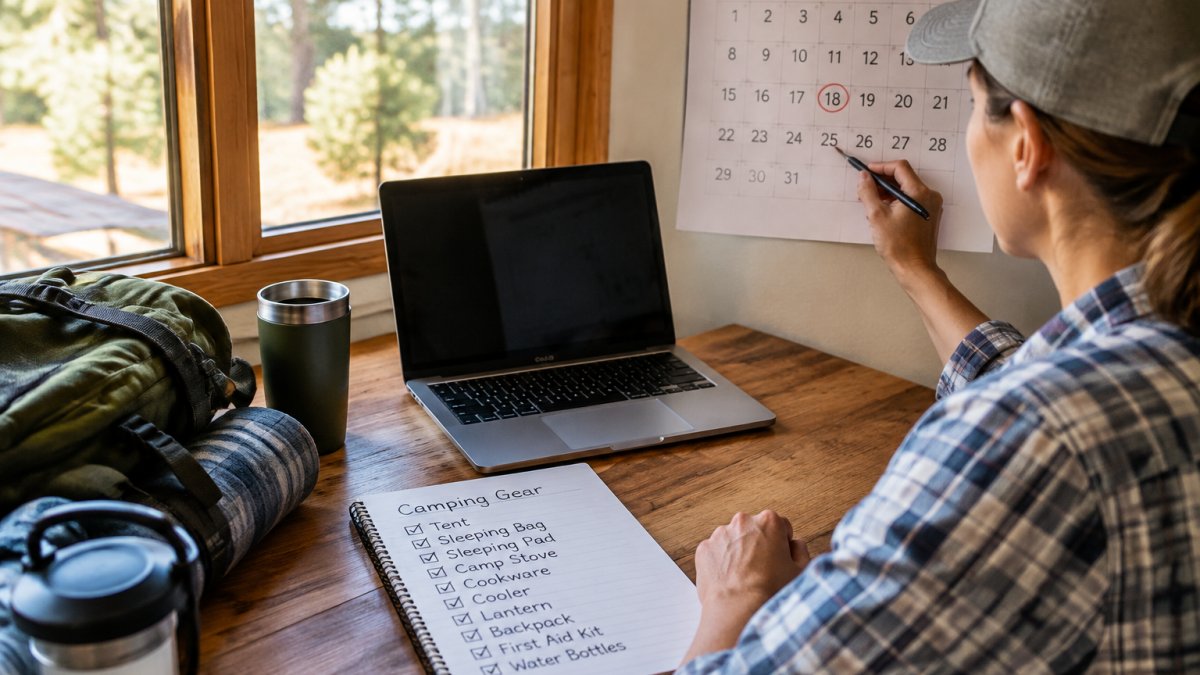
Your arrival date equals the ship date plus transit time, counted in business days only. Start with the day you order, add the handling time, then add the carrier's transit estimate. The method is simple, but the edge cases are where most campers get burned.
Here's the method we recommend:
- Note your order date and time
- Check the cutoff time for that day
- Add handling days to get your ship date
- Add transit days to get your arrival date
- Skip Saturdays, Sundays, and federal holidays
A Worked Example With Real Dates
Say you order a tent on Thursday at 3 p.m. Eastern. The retailer's cutoff is 2 p.m., so your order rolls to Friday as the first business day.
Now change one variable: you order Friday at 10 a.m. before the cutoff. Handling starts Friday, day two is Monday, ship date is Tuesday, and 3-day transit lands you on Friday again. The lesson is that a late-week order rarely gains you time, because the weekend is dead space for most carriers.
Counting Business Days and Handling Time
Business days exclude weekends and federal holidays. If you order Thursday afternoon with a 2-day handling time, your ship date is Monday, not Saturday. Add standard transit on top of that.
A common mistake is treating "2-day shipping" as "arrives in 2 days." It means 2 days in transit after the warehouse ships it. Handling time still applies.
Federal holidays matter more than most shoppers expect.
Working Backward From a Fixed Trip Date
If your trip date is locked in, work backward instead. Take your departure date, subtract the transit time, subtract the handling time, and subtract a two-day buffer. That gives you the latest safe order date.
For a Friday departure with 3-day transit and 1-day handling, order by Monday of that week at the latest. The buffer covers a missed cutoff or a weather delay.
Watch out: a carrier's "estimated delivery" is not a guarantee.
Step 3: Check an Existing Order's Shipping Speed
Once an order is placed, your order confirmation and shipment notification are your best tools. The confirmation lists the shipping method you chose. The shipment notification carries the tracking number.
Here's how to read it:
- Open the shipment notification email
- Copy the tracking number
- Enter it on the carrier's tracking page
- Check the "ship date" and "estimated delivery" lines
- Compare the service level to what you paid for
The tracking status tells you the package's real movement, not the retailer's promise. If the tracking page shows "label created" for two days, the carrier hasn't picked it up yet. That's a sign to call the retailer, not wait.
Step 4: Match the Shipping Method to Your Gear
Standard shipping is fine for a trip weeks away. Expedited and priority shipping earn their keep when you're close to your departure date.
Match the method to the item:
- Bulky gear like tents and sleeping bags: standard shipping, order early
- Small essentials like headlamps and fire starters: expedited is affordable
- Heavy items like coolers: freight shipping may be the only option, and it's slow
- Urgent replacements: next-business-day shipping, ordered before the cutoff
Package weight and box dimensions affect both cost and speed. A large tent ships by ground, not air. Check the shipping rate calculator before checkout so the delivery estimate matches the service you pick.
Camping Gear Shipping Lead Times by Product Type
Lead times vary by gear type because package size and stock location change the fulfillment tier. Tents and sleeping bags usually ship from a domestic warehouse within a day or two. Custom gear and made-to-order items carry longer lead times, sometimes a week or more.
Here's a quick reference for planning:
| Gear Type | Typical Handling | Typical Transit | Order By |
|---|---|---|---|
| Tents | 1-2 business days | 2-5 days | 2 weeks out |
| Sleeping bags | 1-2 business days | 2-5 days | 2 weeks out |
| Small accessories | Same or next day | 2-4 days | 1 week out |
| Custom gear | 5-10 business days | 2-5 days | 3-4 weeks out |
| Freight items | 2-3 business days | 5-10 days | 4 weeks out |
Typical Transit
You can see a real example in this 4-5 person camping tent with mosquito net windows, which notes FedEx shipping, or check availability on this rainstorm-proof speed-opening tent before your trip. Sleeping bags like this portable warm-trip sleeping bag are core items worth ordering early.


How to Avoid Shipping Delays for Camping Gear
Most delays come from three sources: late ordering, wrong addresses, and remote destinations. Fix all three before checkout, and you remove most of the risk before it starts.
Order early. A two-week buffer absorbs a missed cutoff, a carrier backlog, or a stock issue.
Double-check your address. A missing apartment number or a ZIP code typo sends a package back to the warehouse. That adds days.
Watch remote destinations. Shipping to a hotel, lodge, or trail town works, but call ahead and confirm the property accepts packages. Remote ZIP codes can add transit days.
Browsing a survival gear category early lets you order essentials before the rush and avoid the last-minute scramble.

When the Estimated Arrival Is Already Too Late
Sometimes you do everything right and the math still says the gear won't arrive before you leave. That's when you switch from planning to a decision tree. Work through these options in order, because each one trades cost against certainty.
- Upgrade the shipping service. If the order hasn't shipped yet, contact the retailer and ask whether you can pay to move to an expedited or next-business-day service. This only works before the warehouse picks the order, so call the same day you place it.
- Ask for a hold-for-pickup. Most major carriers let you redirect a package to a nearby retail location or service center for pickup. That can shave a day off residential delivery and lets you grab the gear on your way out of town.
- Switch to in-store pickup or a local retailer. If the item is stocked near you, buying it in person beats waiting on a truck. Check the retailer's store inventory before you cancel the online order.
- Rent instead of buy. For tents, sleeping bags, and packs, rental services and local outfitters can put gear in your hands the same day. This is often cheaper than expedited shipping for a one-time trip.
- Build a backup plan. If none of the above works, identify which items are truly essential and which you can borrow, substitute, or do without. A borrowed cooler beats a missed departure.
Watch out: canceling an order after it ships usually triggers a return shipment and a restocking fee, so confirm the order status before you cancel. If the tracking page shows movement, the package is already in the carrier's hands.
How Reliable Delivery Estimates Really Are
A delivery estimate is a prediction, not a promise. Weather, carrier disruptions, address issues, and peak-season volume all move the real arrival date. Winter storms can stall ground networks for days, and the weeks around major shopping holidays are the busiest of the year for carriers.
A common pattern is that estimates hold for standard ground shipments in normal conditions and slip during weather events or peak season. If your trip date is tight, assume the estimate is optimistic by one business day and plan accordingly.
Domestic Warehouse Shipping Benefits for Faster Delivery
Domestic warehouse shipping is the single biggest lever on delivery speed. When gear ships from a U.S. warehouse, it skips customs, avoids international transit, and moves on a predictable business-day schedule.
At FieldToStream, we prioritize products stocked in U.S. warehouses for exactly this reason. Our Commuta Pro Max electric scooter is a clear example, marked as shipping from the U.S. so you can count on domestic transit times.
Here's what domestic shipping buys you:
- Shorter transit windows, often days instead of weeks
- Reliable tracking from pickup to delivery
- No customs holds or import delays
- Faster resolution if something goes wrong
The U.S. Federal Trade Commission's mail order rule requires sellers to ship within the time promised or offer a refund, so a clear shipping policy is a real consumer protection, not just a courtesy (the FTC).
Your trip date won't move, so the gear has to arrive on time.
Frequently Asked Questions
How can I accurately estimate camping gear delivery times?
Start with the retailer's stated handling time, then add the carrier's transit time in business days. Count only Monday through Friday and exclude federal holidays. Add a buffer of two to three days for weather or carrier delays, especially for remote destinations. If the product page lists an estimated delivery date, compare it against your own calculation to spot gaps. Custom or made-to-order items add their own lead time on top of shipping, so factor that in separately before you commit to a purchase date.
What should I do if my camping gear doesn't arrive before my trip?
Check the tracking number first to see where the package is and whether a delay is confirmed. Contact the retailer's customer service with your order number and trip date; some will upgrade shipping or suggest an in-stock alternative that ships faster. If the item is essential, look for local pickup or will-call options near your route. For future trips, order at least two to three weeks ahead and confirm the retailer stocks items in domestic warehouses so transit time stays short.
Do custom camping gear orders have longer shipping lead times?
Yes. Custom or made-to-order gear typically adds production time before the item ever ships, so the total lead time is longer than for in-stock products. Ask the retailer for the specific production window and whether it counts business days. Then add carrier transit time on top. If you have a fixed trip date, confirm the ship date in writing before ordering, and keep a ready-to-ship backup option in mind in case production runs long.
Are there differences in shipping speeds between major camping gear retailers?
Yes. Retailers differ in handling time, cutoff times, carrier selection, and whether they ship from domestic warehouses or drop-ship from suppliers. A retailer that stocks items in U.S. warehouses usually ships faster than one routing orders through third-party suppliers. Check each retailer's shipping policy page for cutoff times and service levels, and read the product page for stock status. Comparing those details before you buy tells you more about real delivery speed than a generic shipping banner.

Sample Block Quote
Praesent vestibulum congue tellus at fringilla. Curabitur vitae semper sem, eu convallis est. Cras felis nunc commodo loremous convallis vitae interdum non nisl. Maecenas ac est sit amet augue pharetra convallis nec danos.
Sample Paragraph Text
Praesent vestibulum congue tellus at fringilla. Curabitur vitae semper sem, eu convallis est. Cras felis nunc commodo eu convallis vitae interdum non nisl. Maecenas ac est sit amet augue pharetra convallis nec danos dui.
Cras suscipit quam et turpis eleifend vitae malesuada magna congue. Damus id ullamcorper neque. Sed vitae mi a mi pretium aliquet ac sed elitos. Pellentesque nulla eros accumsan quis justo at tincidunt lobortis denimes loremous. Suspendisse vestibulum lectus in lectus volutpat, ut dapibus purus pulvinar. Vestibulum sit amet auctor ipsum.