


Lightweight Fishing Gear for Travel: Packable Rods That Fit
Last Updated: November 21, 2026
Quick Summary
Lightweight fishing gear for travel is equipment built to collapse, fold, or shrink so it fits in a backpack, carry-on, or RV locker. Telescopic rods pack smallest, like the pocket combo folding to 8.3 inches, while two-piece rods break to half length for better casting range. Pick based on how you'll fish, not just how you'll pack.
- The pocket telescopic combo weighs about 1.6 ounces combined and costs $19.99.
- Two-piece rods pack to roughly half their length but offer far better casting performance.
- The 42L fishing tackle backpack has 16 pockets and two exterior rod-holder pockets.
- Carry a spare tip top, thread, and rod epoxy to handle on-trail rod repairs.
- Match lure weight to the rod's printed rating, not to the fish alone.
Table of Contents
- Why Lightweight Fishing Gear for Travel Changes How You Pack
- Quick Comparison: Packed Length, Weight, and Price
- The Best Travel Fishing Rods for Backpacks and Carry-Ons
- Choosing an Ultralight Backpacking Fishing Rod for Long Trails
- Compact Fishing Gear Beyond the Rod: Reel, Line, and Tackle
- Packing Fishing Gear for Flights and Trailheads
- Matching Rod Action and Power to Where You Fish
- Build Your Travel Kit at FieldToStream
- Frequently Asked Questions
Why Lightweight Fishing Gear for Travel Changes How You Pack
Lightweight fishing gear for travel is equipment built to collapse, fold, or shrink so it fits in a backpack, carry-on, or RV locker without eating your whole payload. The rod you actually bring beats the rod you leave at home. The difference isn't just convenience: it decides whether fishing happens at all on a trip.
Packing changes the moment you stop treating a rod as a fixed object. A standard one-piece rod runs 6 to 7 feet and rides in a tube on your roof or nothing at all.
Below, we break down packed length, weight, and price across the rods we stock, then show you how to build a complete travel setup that stays under your pack's limits.
Quick Comparison: Packed Length, Weight, and Price
The table below compares the travel-ready options we carry on the specs that matter most when you're packing: how small it gets, how much it weighs, and what it costs. Packed length is the number to scan first.
| Rod | Packed / Rod Length | Rod Weight | Price | Best For |
|---|---|---|---|---|
| Pocket Telescopic Rod & Reel Combo | 8.3 in folded; 37.8 in extended | 0.53 oz rod; 1.1 oz reel | $19.99 | Casual dock, bridge, ice fishing |
| VEVOR IM6 Fiberglass/Carbon 6.5 ft Spinning Combo | 6.5 ft, two-piece | 0.82 lb | $59.99 | Light lures, small water |
| VEVOR IM6 Carbon 6.5 ft Spinning Combo | 6.5 ft, two-piece | 0.88 lb | $61.05 | All-around freshwater |
| VEVOR IM7 Carbon 7 ft Spinning Combo | 7 ft, two-piece | 0.86 lb | $73.94 | Bigger water, heavier lures |
| VEVOR IM7 Carbon 7 ft Baitcasting Combo | 7 ft, two-piece | 0.66 lb | $79.30 | Baitcasting fans |
| VEVOR IM7 Carbon 6.5 ft Baitcasting Combo | 6.5 ft, two-piece | 0.68 lb | $79.30 | Compact baitcasting |
Price
The pocket rod is the most compact option by packed size. The two-piece combos trade that footprint for longer casting range, and their net weights sit under a pound each.
The Best Travel Fishing Rods for Backpacks and Carry-Ons
The best travel fishing rods split into two families: telescopic rods that collapse into a pocket, and two-piece rods that break down to half length. Telescopic wins on packed size. Two-piece wins on casting performance. Pick based on how you'll fish, not just how you'll pack.
Telescopic Rods: Smallest Packed Size
Telescopic rods collapse section by section into the handle. The Outdoor Portable Mini Pen Fishing Rod folds to roughly 8.3 inches and extends to about 37.8 inches, with the rod weighing around 0.53 ounces. The paired mini reel adds about 1.1 ounces.
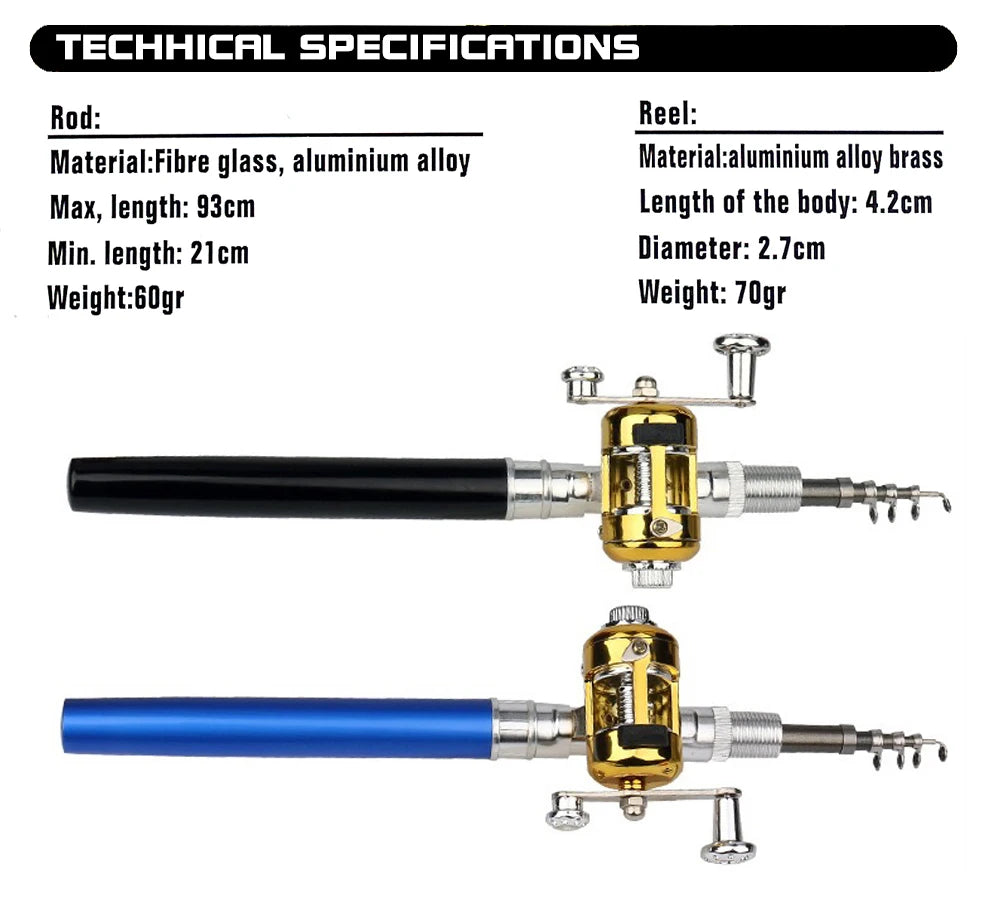
That's a setup that disappears into a glove compartment or daypack. It's built for casual drop or vertical fishing from a dock, bridge, boat, or ice, and it is not designed for conventional casting or heavy fish. Know that going in.
Best for: travelers who want a rod always on hand with zero packing cost. Skip if: you plan to cast lures all day or target big fish.
Two-Piece Rods: More Casting Range, Bigger Packed Size
Two-piece rods break at the midpoint, so a 6.5-foot rod packs to roughly half that length. The trade is obvious: bigger packed size, far better casting. Our VEVOR IM7 carbon fiber spinning combo pairs a 7-foot two-piece rod with a 3000 spinning reel, 7+1 ball bearings, and an EVA handle, at 0.86 pounds net.
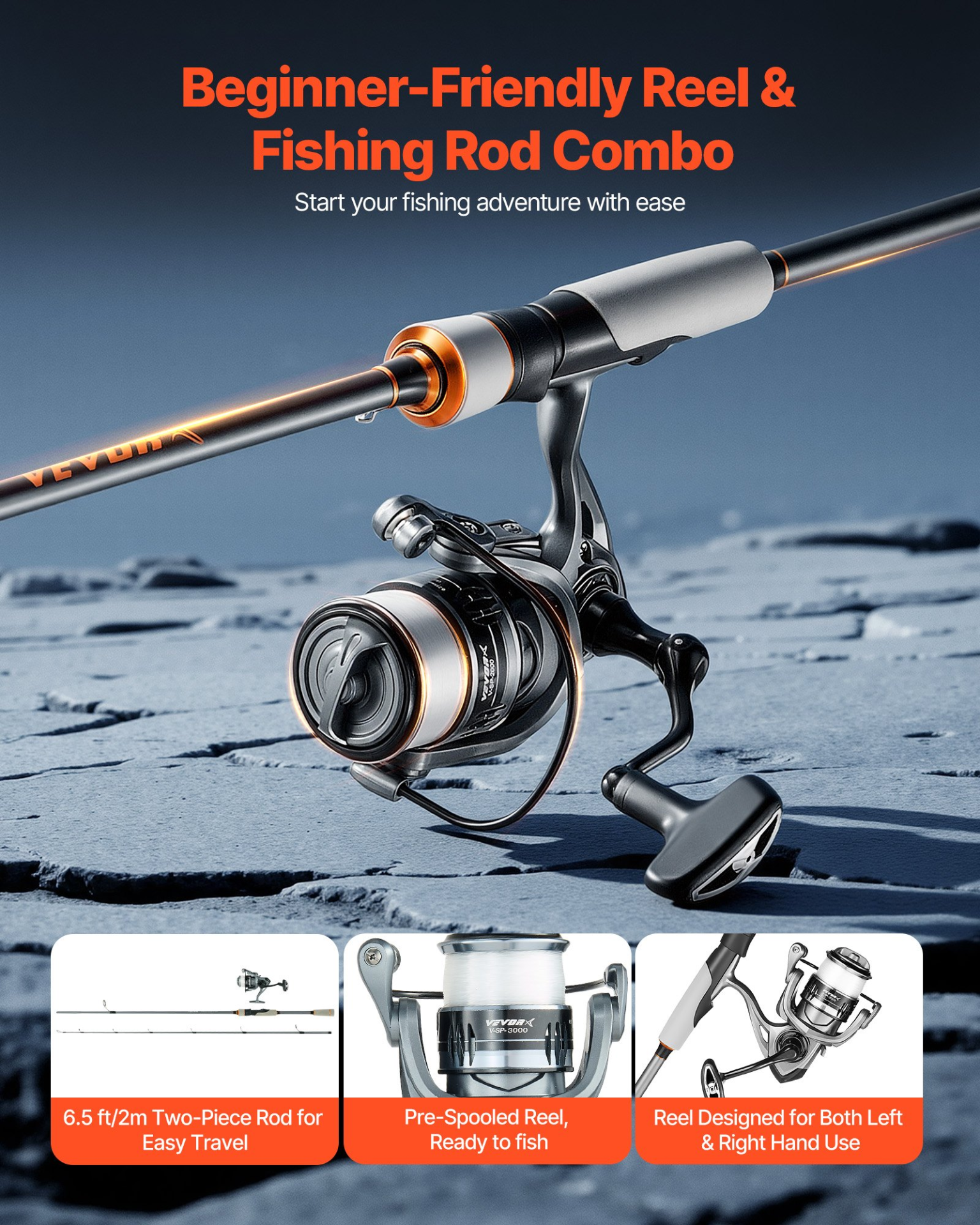
For a lighter touch, the 6.5-foot IM6 carbon combo runs a medium power with a 3000 reel at 0.88 pounds. If you prefer baitcasting, the IM7 7-foot baitcasting combo drops to 0.66 pounds net with a 7.0:1 gear ratio and cork handle.
Watch out: two-piece rods need the joint seated firmly every time you assemble. A loose ferrule clicks, then cracks, usually on the cast that matters.
Choosing an Ultralight Backpacking Fishing Rod for Long Trails
An ultralight backpacking fishing rod is one that adds minimal weight and packed bulk to a multi-day load, usually a telescopic or short two-piece model under a pound.
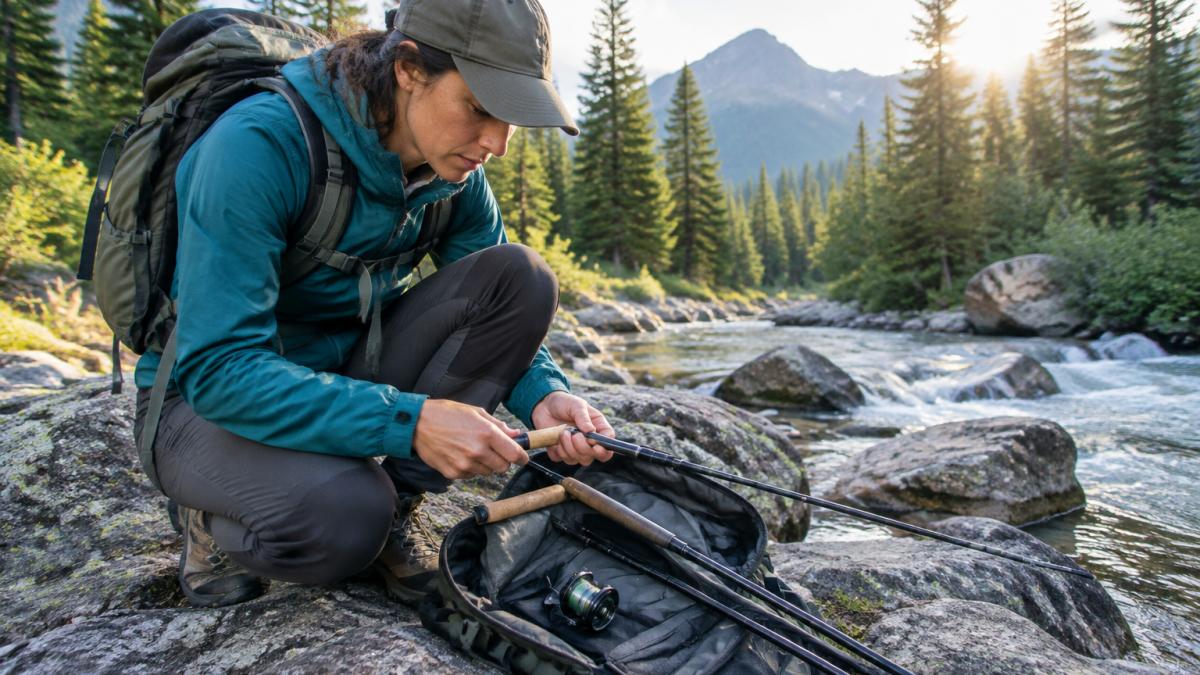
Start with total kit weight, not rod weight alone. The pocket combo comes in near 1.6 ounces combined, which is hard to beat for backcountry fishing where you're casting into small pockets of water.
Then think about what you'll actually do at the water. Long trails often mean small streams and short casts, where a compact rod shines. Wide rivers and lake shorelines reward the longer two-piece rods with more reach.
Compact Fishing Gear Beyond the Rod: Reel, Line, and Tackle
Compact fishing gear is the supporting cast: reels, line, and terminal tackle sized to travel. The rod gets the attention, but the rest of the kit is where packing discipline pays off.
For line, braided options pack small and travel well. The JOF PE braided fishing line comes in 300m, 500m, and 1000m spools with 18 to 88 lb ratings, so you can spool a reel without carrying excess.
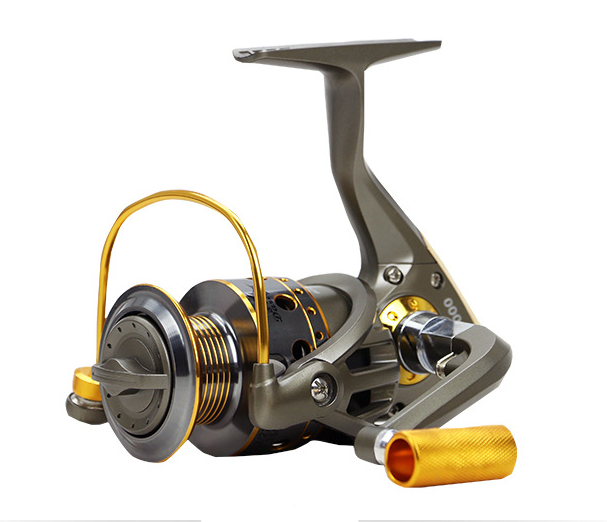
For reels, the 10-bearing spinning reel runs from size 1000 through 7000 with a metal spool and folding handle, which makes it easy to match to your rod.
Watch out: rinse and dry any reel after sand, dirt, or saltwater exposure, and check the drag before your first cast of the day. A gritty reel ruins a trip faster than a dull hook.
Packing Fishing Gear for Flights and Trailheads
Packing fishing gear for flights comes down to four rules: keep rods out of checked-luggage crush zones, keep line and hooks together and contained, keep everything under the airline's carry-on limits, and know the rules before you reach security. Rods travel best in a hard tube or padded sleeve, and reels come off the rod for the trip.
Start with the bag. The 42L fishing tackle backpack handles the trailhead side well.
For air travel, confirm the current rules with your airline and the TSA before you fly, since hooks and tools may have carry-on restrictions and enforcement varies.
Watch out: a rod tube that meets carry-on size on one airline may exceed it on a regional carrier, so measure the packed tube against the specific carrier's published limit before you leave.
Fishing license requirements are set by state fish and wildlife agencies. Check the destination agency's website before you travel to confirm licensing, permits, and rules for transporting fish, bait, and gear.
Field repair belongs in the same pouch.
Matching Rod Action and Power to Where You Fish
Rod power and action decide what a rod can throw and what it can land. Power is the rod's backbone, from light to heavy. Action is where it bends, from fast tip-flex to slow, full-curve. Match both to your water and target, and the rod feels right on the first cast.
For small streams and light lures, a medium-light rod like the 6.5-foot IM6 fiberglass/carbon combo, rated for 3-18g lures, suits lighter presentations. General freshwater fishing suits a medium power rod with a wider lure range.
Adapt the kit to the destination rather than packing one rod for everything:
- Small streams and creeks: short casts, tight cover, and light line. A medium-light fast-action rod in the 6.5-foot range casts small spinners and tiny jigs accurately, and the short length keeps the tip out of branches. Favor a 1000- or 2000-size reel with 6-10 lb braid.
- Lakes and reservoirs: longer casts and open water. A 7-foot medium or medium-heavy rod gives more distance and leverage, paired with a 2500-3000 reel and 10-20 lb braid. This is where the 7-foot IM7 spinning combo fits best.
- Rivers with current: you need backbone to steer a fish away from structure. Medium-heavy power with a fast action turns fish faster, and a baitcasting combo like the 7-foot IM7 with a 7.0:1 gear ratio works well for working lures in current.
- Saltwater and brackish water: corrosion is the deciding factor. Rinse reels and rods with fresh water after every session, and expect to replace line more often. A medium-heavy rod rated for heavier lures handles inshore species, but check that the reel's drag and the line's rating match the fish you expect.
- Species-specific choices: panfish and trout reward light line and small lures; bass and pike reward medium-heavy power and larger lures; catfish and carp call for heavier line and a rod with more backbone. Match the lure weight to the rod's printed rating, not to the fish alone.
Compact lures should match that power. The Walk Fish metal casting jig comes in 7g through 30g weights, so you can size the lure to your rod's rating and the depth you're fishing. A jig that's too light won't load the rod; too heavy risks the tip.
Build Your Travel Kit at FieldToStream
Building a travel kit is a series of small decisions that add up to a pack you'll actually carry. Start with the rod that matches your water, add a reel and line sized to it, then fill one pouch with terminal tackle and stop. That's a complete lightweight setup.
As a veteran-owned shop, we stock gear in U.S. warehouses for faster delivery and explain each product honestly, so you know what you're getting before it ships. Our pocket telescopic combo is the easiest place to start, and our two-piece combos cover everything beyond casual drop fishing.
Get started with FieldToStream and build a travel setup that fits your pack, your water, and your trip.
The hardest part of travel fishing isn't the fishing. It's committing to gear small enough to bring and good enough to trust.
Frequently Asked Questions
What fishing gear can I take on a plane?
Checked baggage is the safe place for rods, reels, and tackle. Pack rods in a hard tube or a stiffened sleeve, and put reels in a checked bag with the drag backed off. Carry-on rules vary by airline and screening officer, so treat anything with a hook or a long metal rod as checked-baggage material. A telescopic rod that folds to about 8.3 inches is far easier to pack than a two-piece rod, but it still belongs in a checked bag.
What is the best lightweight fishing rod for travel?
It depends on how you plan to fish. For casual dock, bridge, or ice fishing where space is the priority, a pocket telescopic rod and reel combo that folds to roughly 8.3 inches and weighs about 0.53 ounces is the smallest option. For actual casting at bass, panfish, or trout, a two-piece spinning combo in the 6.5 to 7 ft range gives you real casting distance and better line control. Match rod power to your lure weight: medium-light for small lures, medium-heavy for heavier ones.
How do I pack fishing gear in a carry-on?
Skip the rod in the cabin and check it. For the rest of your compact fishing gear, use a dry bag or a small tackle pouch to keep hooks, lures, and terminal tackle contained and to protect line from moisture. Keep line spools in a separate bag so they do not unspool against other gear. A 42-liter tackle backpack with rod holders works well as a single checked or overhead-bag item for a full travel fishing setup, and it keeps tackle, tools, and layers in one place.
What fishing gear is best for backpacking?
Backpacking rewards a minimalist setup: one rod, one reel, a small box of terminal tackle, and a dry bag. An ultralight backpacking fishing rod should add well under a pound to your pack. A telescopic rod is the lightest choice, but if you plan to cast rather than drop a line straight down, a two-piece spinning combo that packs into a strap-on tube is worth the extra weight. Bring a spare tip if your rod uses one, and rinse and dry the reel after every trip.

Sample Block Quote
Praesent vestibulum congue tellus at fringilla. Curabitur vitae semper sem, eu convallis est. Cras felis nunc commodo loremous convallis vitae interdum non nisl. Maecenas ac est sit amet augue pharetra convallis nec danos.
Sample Paragraph Text
Praesent vestibulum congue tellus at fringilla. Curabitur vitae semper sem, eu convallis est. Cras felis nunc commodo eu convallis vitae interdum non nisl. Maecenas ac est sit amet augue pharetra convallis nec danos dui.
Cras suscipit quam et turpis eleifend vitae malesuada magna congue. Damus id ullamcorper neque. Sed vitae mi a mi pretium aliquet ac sed elitos. Pellentesque nulla eros accumsan quis justo at tincidunt lobortis denimes loremous. Suspendisse vestibulum lectus in lectus volutpat, ut dapibus purus pulvinar. Vestibulum sit amet auctor ipsum.