


What Is the Best Fishing Gear for Beginners?
Last Updated: November 24, 2026
Quick Summary
The best fishing gear for beginners is a short, honest list: one spinning rod and reel combo, fresh line, a few hooks, split-shot weights, bobbers, and a small tackle box. Buy gear for the water you will actually fish, since a 7-foot medium-heavy spinning combo covers most freshwater situations. Everything else is optional.
- A 6.5- to 7-foot two-piece spinning rod in medium or medium-light power suits most beginners.
- A starter setup costs roughly $75 to $120 total, including combo, line, hooks, weights, bobbers and box.
- Start with live bait to build confidence, then add a small lure assortment later.
- Set the drag before every cast: too loose and you cannot set the hook.
- Fishing without a valid license is a common beginner mistake, so check your state agency first.
Table of Contents
- What Gear Does a Beginner Fisherman Actually Need?
- Starter Combos Compared: Rod, Reel, and Price at a Glance
- How to Pick the Best Beginner Fishing Rod
- Building a Beginner Fishing Setup: Line, Hooks, Weights, and Bobbers
- Is a Beginner Fishing Kit for Adults Worth Buying?
- Matching Your Gear to Where and What You Fish
- Your Free Fishing for Beginners PDF: First-Trip Checklist
- Setting Up Your Rod and Reel Before the First Cast
- Frequently Asked Questions
What Gear Does a Beginner Fisherman Actually Need?
Buy gear for the water you will actually fish. A 7-foot medium-heavy spinning combo covers most freshwater situations; a 6.5-foot medium-light setup handles lighter lures and smaller species.
A fishing rod is the pole itself; a fishing reel is the spool-and-handle unit that holds and releases line.
state fish and wildlife agency licensing and regulations guidance
The essentials, in priority order:
- Rod and reel combo, spinning type
- Monofilament fishing line, matched to the reel
- Hooks in two or three sizes
Notice what is missing: the landing net, extra lure kits, the second rod. Most beginners who quit bought optional gear before they learned to cast.
Starter Combos Compared: Rod, Reel, and Price at a Glance
| Combo | Rod Length | Rod Power | Line Weight | Reel | Price |
|---|---|---|---|---|---|
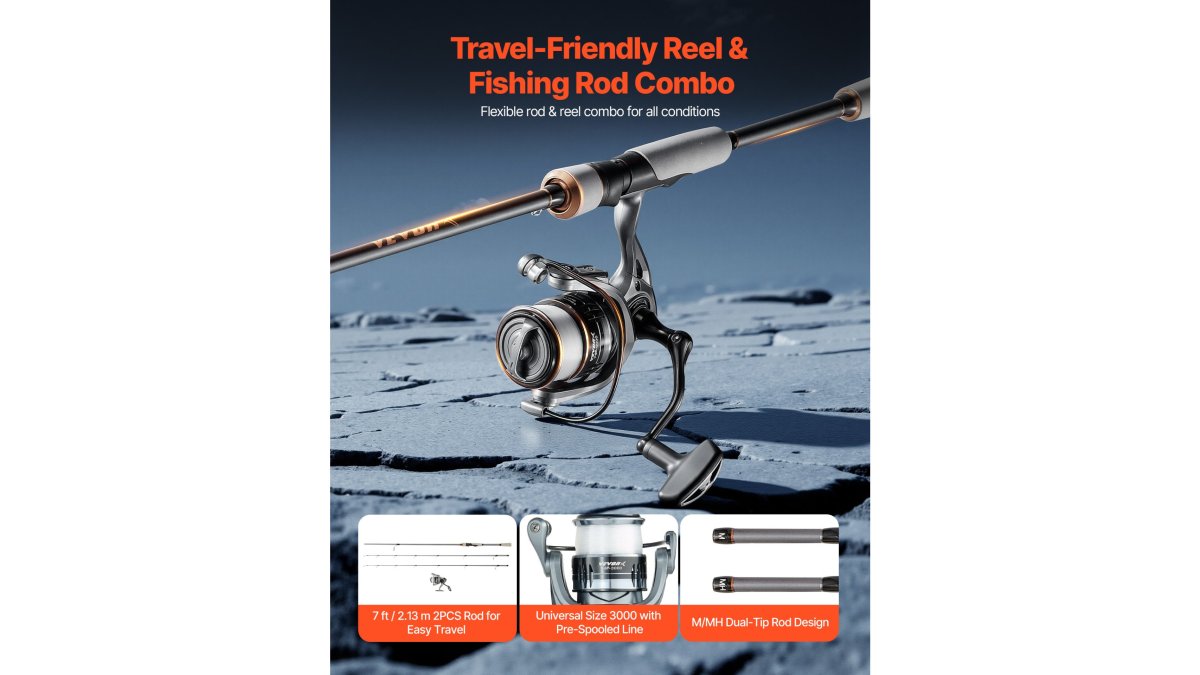
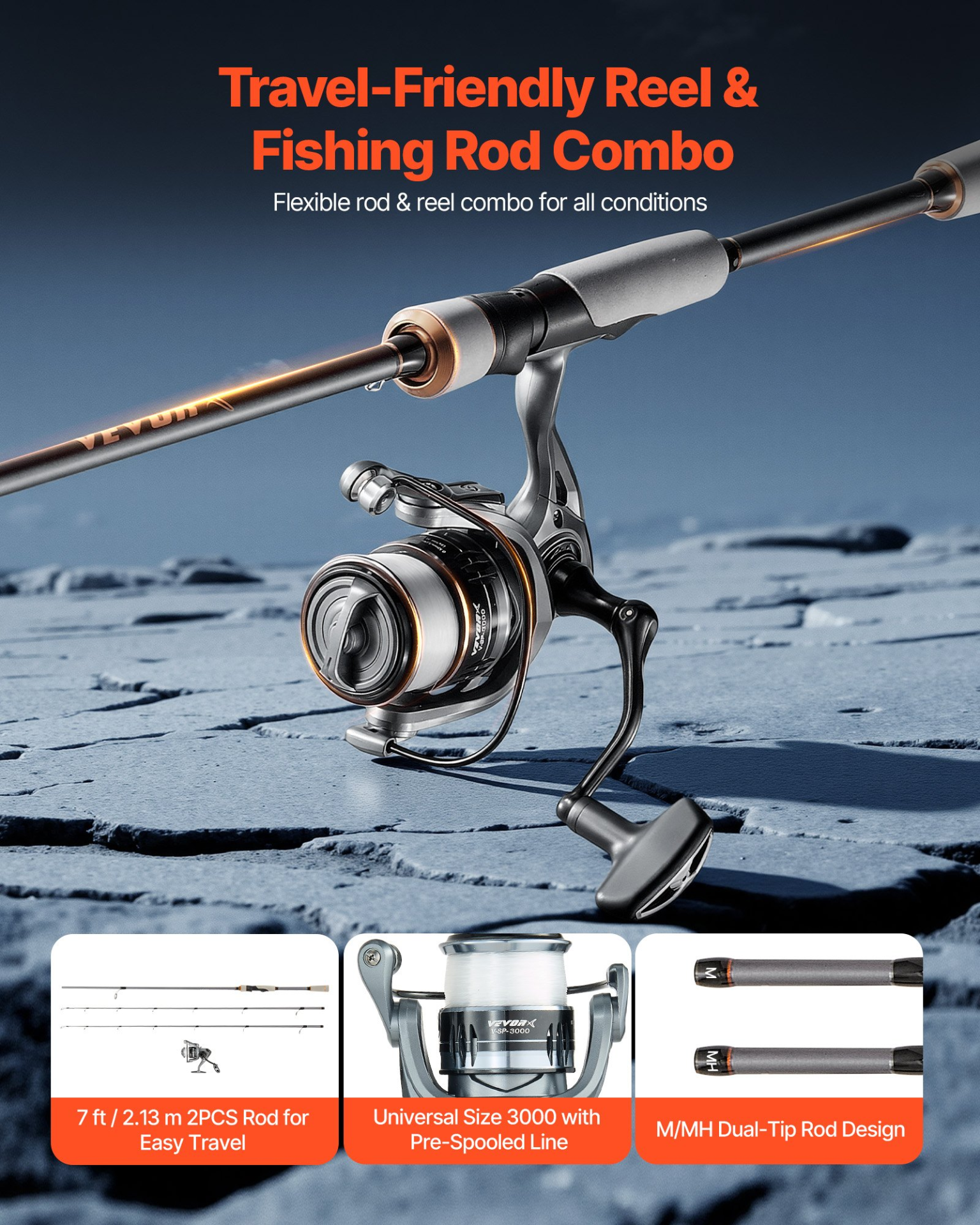
| IM7 Carbon Fiber Spinning Combo | 7 ft | Medium-Heavy | 10-30 lb | Spinning 3000 | $73.94 |
| IM6 Carbon Fiber Spinning Combo | 6.5 ft | Medium | 6-15 lb | Spinning 3000 | $61.05 |
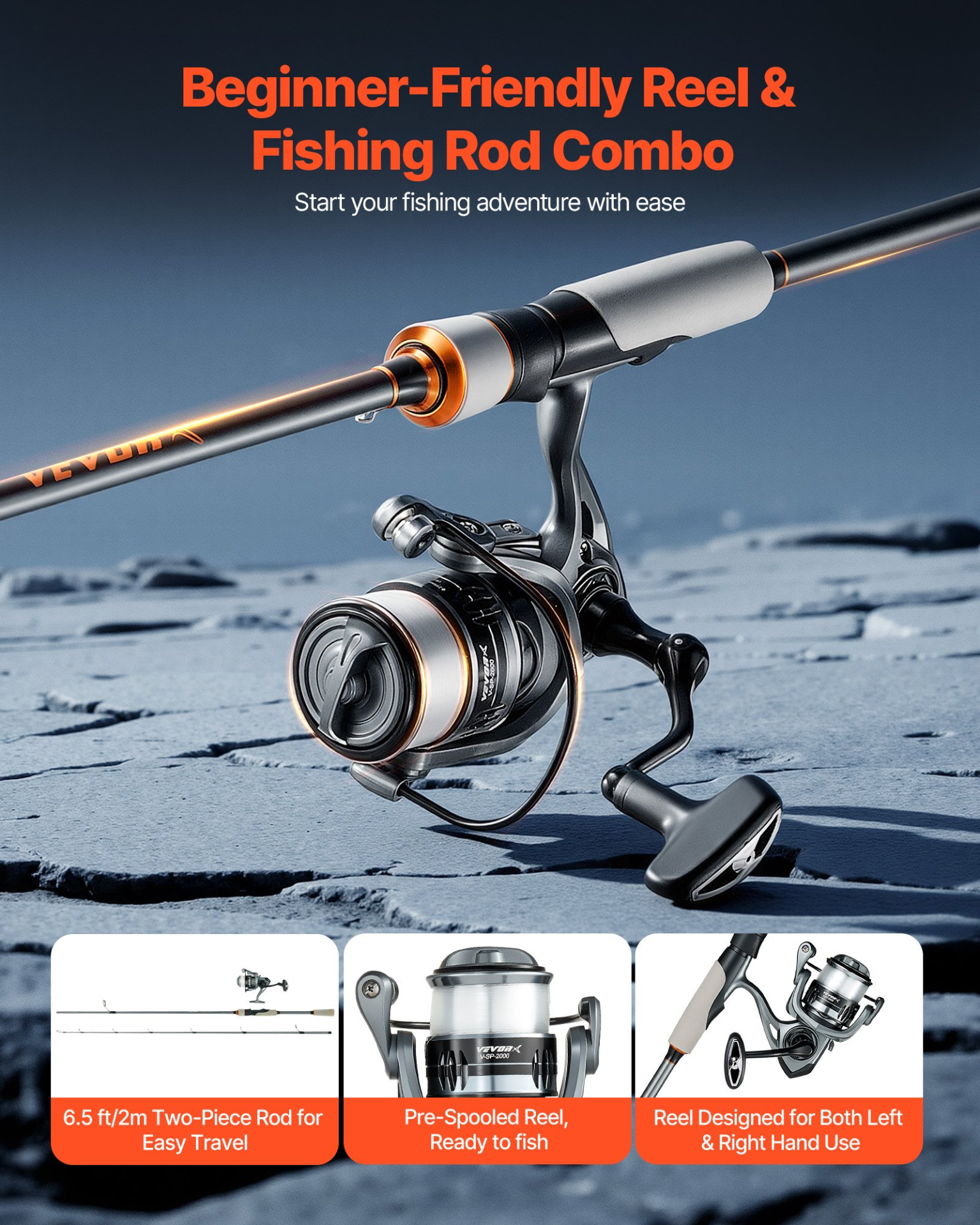
| IM6 Fiberglass & Carbon Fiber Combo | 6.5 ft | Medium-Light | 4-12 lb | Spinning 2000 | $59.99 |
Line Weight
The 7-foot IM7 combo suits most adults.
The 6.5-foot IM6 carbon fiber combo has medium power and a 6-15 lb line rating.
Budget matters most? The IM6 fiberglass and carbon fiber combo at $59.99 is the lowest-priced of the three.
U.S. Fish and Wildlife Service fishing and outdoor recreation resources
For a full look at the 7-foot option, you can compare the IM7 carbon fiber spinning combo.
How to Pick the Best Beginner Fishing Rod
The best beginner fishing rod is a 6.5- to 7-foot, two-piece spinning rod in medium or medium-light power, the widest range of freshwater fishing while staying easy to cast and store.
Two-piece rods break down for easier storage and transport.
Rod Length, Power, and Action in Plain Terms
Rod length controls casting distance and use. Shorter rods, around 6 feet, are accurate in tight spots like creek fishing.
Rod power describes how much weight the rod handles before it bends. Light and medium-light suit small lures and panfish.
Rod action describes where the rod bends.
For a 7-foot two-piece spinning rod that matches this advice, you can view the IM7 carbon fiber rod and reel combo.
Building a Beginner Fishing Setup: Line, Hooks, Weights, and Bobbers
Your beginner fishing setup is incomplete without terminal tackle: the line, hooks, weights, and bobbers that connect you to the fish.
Fishing line. Start with monofilament: inexpensive, forgiving, and easy to tie.
Hooks. Buy two or three sizes rather than a hundred of one. Match hook size to bait and target species: smaller hooks catch more panfish, larger hooks suit bass.
Weights. Split-shot sinkers pinch onto the line and are easy to move. Get an assortment.
Bobbers. A clip-on float keeps bait at a set depth and shows you the strike.
You can pick up a nylon fishing line spool to finish the setup.
Lures vs. Live Bait: Which to Start With
Live bait catches fish with less skill. Lures teach you more. That is the honest trade-off.
Live bait, such as worms or minnows, does the work for you.
Artificial bait, meaning lures, requires you to impart action. It is more engaging and lets you cover water fast.
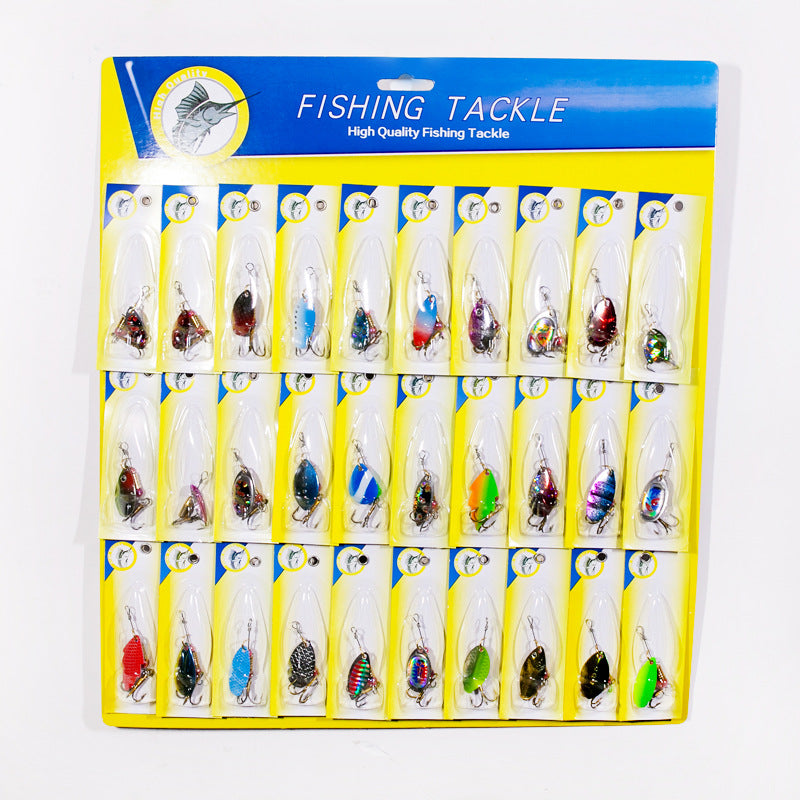
Our advice: start with live bait to build confidence, then add a small lure assortment. A starter lure pack is an inexpensive way to try artificial bait without committing.
Is a Beginner Fishing Kit for Adults Worth Buying?
A beginner fishing kit for adults is worth buying when it bundles a rod, reel, and line in one box at a price lower than buying those three parts separately. It is a poor buy when it pads the box with low-quality lures you will never use or a reel with no listed specifications.
Pre-assembled kits can save decisions, but kit quality varies, so check each component. Build the kit yourself from three parts: a solid combo, fresh line, and a compact tackle assortment. A tackle kit with a carry case keeps hooks and lures organized and fits in a tackle bag, vehicle, or RV.
Watch out: if a kit's reel has no listed line capacity or gear ratio, check the specifications before you buy.
What a Beginner Setup Actually Costs
Use the tiers below as a rough planning guide; actual prices vary by retailer and season.
Starter tier (about $75 to $120 total):
- Rod and reel combo: $40 to $70
- Monofilament line, 300-yard spool: $6 to $12
- Hook assortment: $4 to $8
Midrange tier (about $150 to $250 total):
- Better combo with smoother drag and more bearings: $80 to $150
- Braided line plus a monofilament leader spool: $15 to $30
- Expanded hook and weight assortment: $15 to $25
Upgrade tier (about $300 and up):
- Second rod for a different technique: $60 to $150
- Quality tackle bag: $40 to $80
- Polarized sunglasses and sun protection: $30 to $80
Recurring Costs Beginners Forget
Gear is not a one-time purchase. Budget for these ongoing costs:
- Bait: live bait is a recurring cost on each trip.
- Line replacement: monofilament can degrade from sun and abrasion, so respool as needed.
- Lost terminal tackle: snags can cost hooks, weights, and bobbers.
How to Decide Between a Kit and a Built Setup
Buy a kit if the total price is lower than the sum of its parts and the reel lists a gear ratio and line capacity. Build your own if you already know you want a specific rod power or line weight, or if the kit's lures look like filler. Either way, set a total budget first and let the tier list above guide what to buy now versus later.
Matching Your Gear to Where and What You Fish
Gear follows water. A setup that excels on a farm pond may struggle on a windy reservoir. Work through three questions in order: where will you fish, what will you target, and what conditions will you face. The answers narrow your rod, reel, line, and terminal tackle to a short list.
Step 1: Match the Rod to the Water
- Farm ponds and small lakes from shore: a 6.5- to 7-foot medium-power spinning rod casts light lures and bait far enough to reach feeding lanes without overpowering panfish. A 2500- or 3000-size reel spooled with 8- to 10-pound monofilament covers most pond work.
- Large reservoirs and windy shorelines: go to a 7-foot medium-heavy rod with 10- to 30-pound line. The extra length and backbone punch casts into wind and turn bigger fish away from dock pilings and rock. A 3000-size reel balances this rod.
- Creeks and small rivers: a 6- to 6.5-foot medium-light rod keeps casts accurate around overhanging brush and undercut banks. Pair it with a 2000-size reel and 4- to 8-pound line so small lures and live bait drift naturally.
Step 2: Match the Rig to the Species
- Panfish (bluegill, crappie, perch): medium-light rod, 4- to 8-pound line, a size 8 to 6 hook, a small split-shot, and a clip-on bobber set 2 to 4 feet above the bait. This is the most forgiving rig a beginner can tie.
- Trout: medium-light rod, 4- to 6-pound line, small hooks, and light split-shot. Trout have sharp eyesight, so lighter line and natural bait or small spinners outperform heavy tackle.
- Bass: medium or medium-heavy rod, 10- to 17-pound line, a 2/0 to 4/0 hook for soft plastics, and heavier weights for Texas rigs. Bass relate to cover, so accuracy around docks, weed edges, and laydowns matters more than distance.
Step 3: Adjust for Conditions
- Wind: shorten your cast, add a heavier weight, and keep the rod tip low. A heavier split-shot keeps a bobber rig from blowing back to shore.
- Clear water: downsize line and hooks. Fish see heavy line and shy away.
- Stained or muddy water: upsize slightly and use bait with scent or vibration. Fish rely less on sight in low clarity.
Travel and Packable Setups
If you fish while traveling, packable gear wins. A pocket telescopic rod and reel combo folds to about 8 inches and fits a glove compartment or backpack. It suits casual dock, bridge, or ice fishing, not conventional casting. Treat it as a backup rod, not your primary setup.
If you fish while traveling, read our guide to lightweight packable fishing gear.
National Park Service fishing regulations and safety guidance
Your Free Fishing for Beginners PDF: First-Trip Checklist
A fishing for beginners PDF is only useful if it is short enough to actually use. Here is our first-trip checklist, built from what new anglers forget most often.
Before you leave:
- Fishing license purchased and on you
- Rod and reel assembled and line checked for nicks
- Hooks, weights, and bobbers in the tackle box
At the water:
- Check local regulations and posted signs
- Rig up on land, not at the water's edge
- Wet your hands before handling fish you plan to release
Watch out: fishing without a valid license is a common beginner mistake. Requirements vary by state, so check your state agency's site before you go.
Print this list and keep it in your tackle box.
Setting Up Your Rod and Reel Before the First Cast
Setup takes about fifteen minutes. Do it at home, not on the bank with wind in your face.
- Join the two rod sections. Push them together firmly and align the guides.
- Mount the reel. Seat the reel foot in the reel seat and tighten the locking nut.
- Spool the line. Tie the line to the reel spool with an arbor knot, then wind it on under light tension.
- Fill to the right level. Leave about 1/8 inch of spool lip exposed. Overfilling causes tangles.
- Thread the guides. Run line through every guide, from butt to tip.
- Tie on terminal tackle. Add a hook, or a bobber and weight for a float rig.
- Set the drag. Pull line off by hand. It should come off with firm resistance, not freely.
Don't overlook the drag setting. Too loose and you cannot set the hook. Too tight and light line snaps on the strike.
Getting on the water for the first time should feel simple, not like assembling furniture. FieldToStream is a veteran-owned small business.
Frequently Asked Questions
What should I buy first for fishing?
Start with a rod and reel combo, then add line, hooks, split-shot weights, and a couple of bobbers. A spinning combo in the 6.5 to 7 foot range covers most freshwater situations. FieldToStream's VEVOR IM6 Fiberglass & Carbon Fiber combo at $59.99 is a sensible first purchase, and the 300M Wear-Resistant Nylon Fishing Line at $13.85 gets you spooled up without overspending.
What is the best beginner fishing rod size?
A 6.5 to 7 foot rod is the sweet spot for most beginners. Shorter rods are easier to control around docks and trees, while longer rods cast farther from shore. Match rod power to your target: medium-light for panfish and trout, medium for bass and general freshwater, medium-heavy for heavier cover. The best beginner fishing rod is one that matches the water you actually fish, not the biggest fish you hope to catch.
Is a beginner fishing kit worth buying?
A kit saves time and usually costs less than buying pieces separately, but check what is inside. Look for a rod and reel that match in size, line that is already spooled or included, and a small tackle assortment. A beginner fishing kit for adults works well when it covers rod, reel, line, hooks, and a few lures. Skip kits that bundle low-quality line or too many lures you will never use.
What is the 80/20 rule in fishing?
The 80/20 rule in fishing means roughly 80 percent of your catches come from 20 percent of your tackle. For beginners, that 20 percent is usually a few hook sizes, a couple of bobbers, split-shot weights, and one or two lure styles. Instead of buying everything at once, master a small handful of presentations first. A compact kit like the Fishing Lure & Tackle Kit with Carry Case at $31.28 covers the essentials without clutter.
Do I need a license to fish as a beginner?
Yes, in most states you need a fishing license before your first cast, and rules vary by state and by water. Check your state wildlife agency's website for license costs, age exemptions, and season dates. Some states offer free fishing days, which are a good way to try the hobby before buying. Always follow local regulations on hook types, bag limits, and protected species.

Sample Block Quote
Praesent vestibulum congue tellus at fringilla. Curabitur vitae semper sem, eu convallis est. Cras felis nunc commodo loremous convallis vitae interdum non nisl. Maecenas ac est sit amet augue pharetra convallis nec danos.
Sample Paragraph Text
Praesent vestibulum congue tellus at fringilla. Curabitur vitae semper sem, eu convallis est. Cras felis nunc commodo eu convallis vitae interdum non nisl. Maecenas ac est sit amet augue pharetra convallis nec danos dui.
Cras suscipit quam et turpis eleifend vitae malesuada magna congue. Damus id ullamcorper neque. Sed vitae mi a mi pretium aliquet ac sed elitos. Pellentesque nulla eros accumsan quis justo at tincidunt lobortis denimes loremous. Suspendisse vestibulum lectus in lectus volutpat, ut dapibus purus pulvinar. Vestibulum sit amet auctor ipsum.