


How to Choose Camping Equipment That Fits Your Trip
Last Updated: November 17, 2026
Quick Summary
Choose camping equipment by starting with your trip, not the gear aisle: answer how you'll sleep, the season and weather, group size, and your experience level, then test every purchase against those answers. Beginners should buy the sleep system and shelter first, then rent or borrow the rest until habits are clear.
- A three-season tent covers most spring-through-fall trips.
- Pick a sleeping bag rated 10 to 15 degrees below the forecast low.
- Use R-3 to R-4 sleeping pads for three-season camping.
- A 1-liter pot suits one or two people; a 2-liter pot suits three or four.
- Build a permanent gear bin with a printed checklist taped inside the lid.
Table of Contents
- Start With Your Trip, Not the Gear Aisle
- How to Choose Camping Equipment for Beginners
- Your Camping Equipment List, Category by Category
- The 5 Most Important Things to Bring Camping
- Weight, Packed Size, and How You'll Haul It
- The Most Forgotten Camping Items and How to Catch Them
- Check Compatibility and Safety Specs Before You Pay
- Build Your Gear Plan With FieldToStream
- Frequently Asked Questions
Start With Your Trip, Not the Gear Aisle
Most people learn how to choose camping equipment the hard way: they buy what looks good on a shelf, then discover it doesn't fit the trip they actually take.
Camping equipment is any portable gear that keeps you sheltered, warm, fed, hydrated, and safe while sleeping outdoors. That definition matters because it puts function ahead of brand names.
The Four Questions That Narrow Every Choice
Answer these before you spend a dollar:
- How will you sleep? Car camping allows heavy, comfortable gear. Backpacking demands light, compact gear.
- What season and weather? A three-season tent handles spring through fall. Winter camping needs different shelter and sleep gear entirely.
- How many people? Group size sets tent capacity, cookware size, and cooler volume.
- What's your experience level? Beginners should rent or borrow before committing to expensive items.
Write your four answers down. Every product decision downstream gets tested against them.
How to Choose Camping Equipment for Beginners
Beginners should buy the sleep system and shelter first, then rent or borrow everything else until they know their habits. This order prevents the most common waste: spending big on gadgets while sleeping cold and wet.
Buy the Sleep System and Shelter First
Your tent, sleeping bag, and sleeping pad decide whether you enjoy camping at all. Start with a tent sized for your group plus a little extra room for gear.
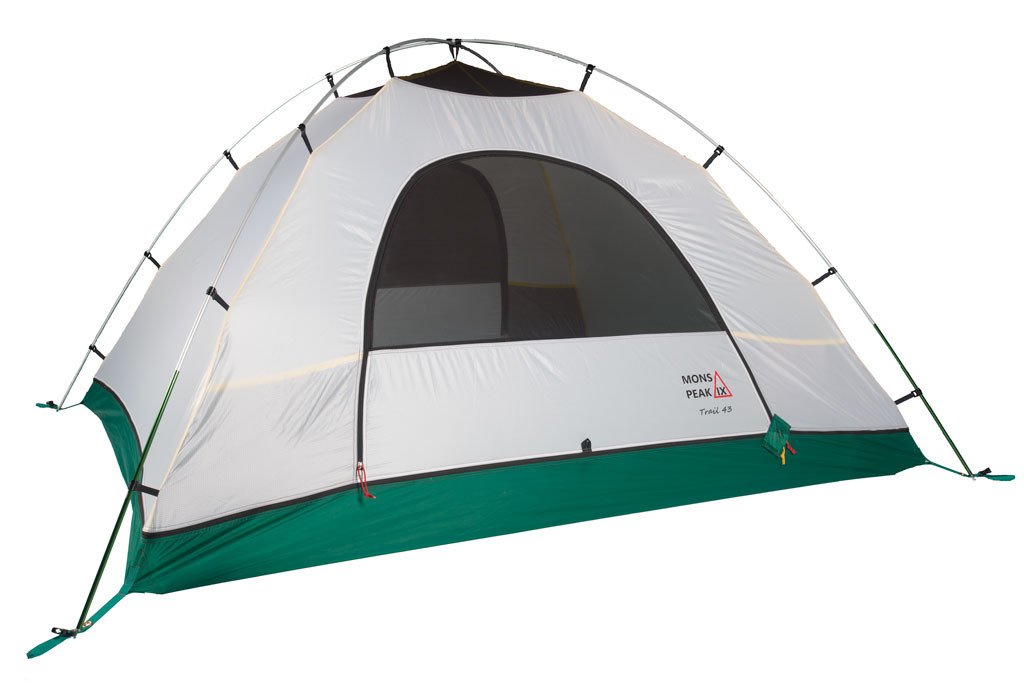
For a concrete starting point, our Trail 43 Convertible 3-4 Person Backpacking Tent converts between three- and four-person configurations by swapping color-coded floor/canopy sections and matching pole components.
Rent, Borrow, or Buy Used Before You Commit
A common mistake is buying a full kit before the first trip. Rent a tent and bag for one weekend. Borrow a stove from a friend. Buy used gear where condition allows, checking zippers, seams, pole segments, and waterproof coatings before paying.
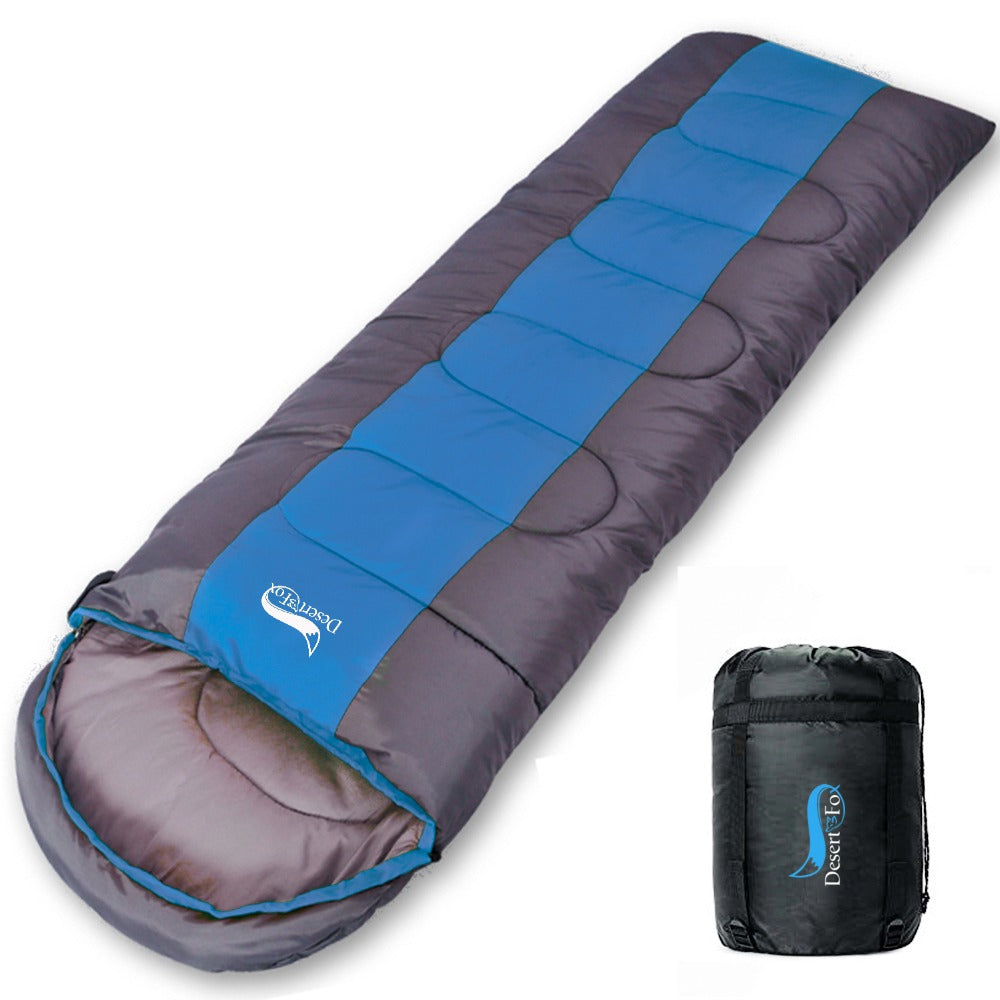
Once you know you'll keep camping, upgrade deliberately. That's when a first sleeping bag purchase makes sense, like our lightweight envelope sleeping bag built for backpacking and travel.
Your Camping Equipment List, Category by Category
A complete camping equipment list covers shelter, sleep, kitchen, water, clothing, lighting, navigation, and safety. Treat it as categories to fill, not brands to buy.
Shelter and Sleep
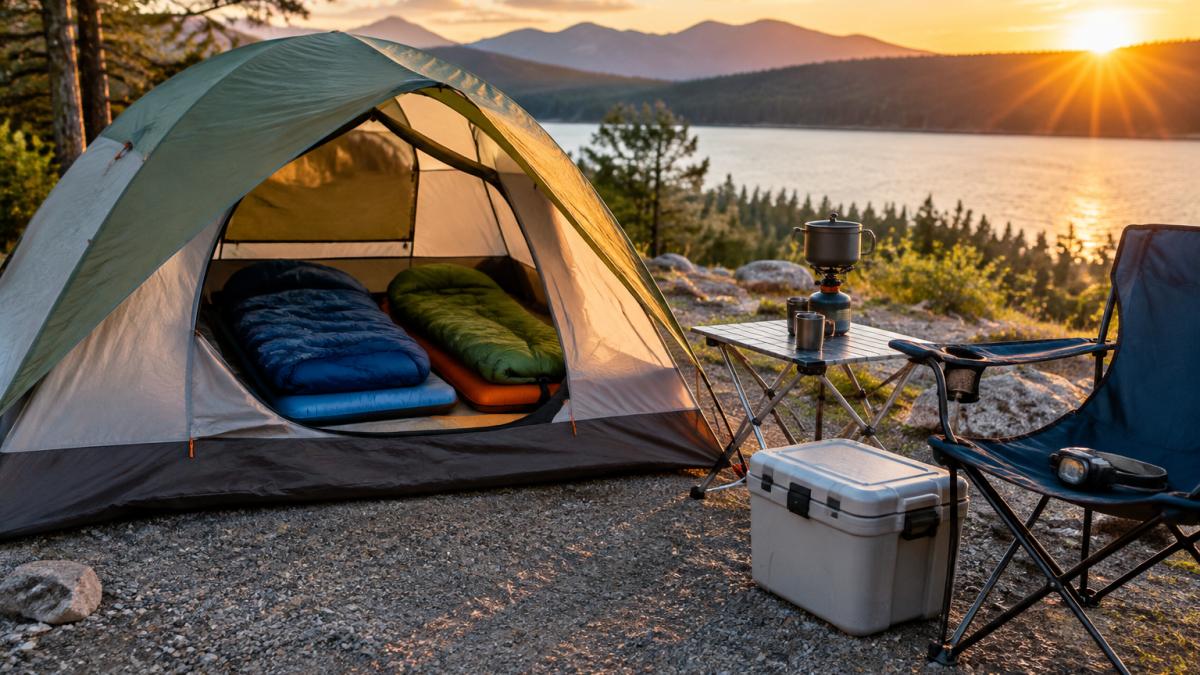
- Tent with a footprint, stakes, and guy lines. Size it by sleeping capacity plus one: a two-person trip fits a three-person tent once you account for pads and duffels, and a four-person trip fits a four- or five-person tent if you want gear inside.
- Sleeping bag matched to expected low temperatures. Pick a bag rated for the coldest night you expect, not the average; a bag rated 10 to 15 degrees below the forecast low gives you a margin for cold snaps and altitude.
- Sleeping pad or camping mattress for insulation and comfort. Look at the pad's R-value, which measures resistance to heat loss: roughly R-2 for mild summer nights, R-3 to R-4 for three-season use, and R-5 and up for cold ground or winter.
Kitchen, Food Storage, and Water
- Camp stove and fuel, plus a lighter or matches. Match stove output to group size: a small canister stove boils water for one or two, while a two-burner propane stove feeds a family and handles a frying pan.
- Camping pot and frying pan, nested if possible. A 1-liter pot suits one or two people; a 2-liter pot or a nesting set suits three or four.
- Cooler sized to trip length and group size. A common rule of thumb is about 2 pounds of ice per person per day for a weekend, and a cooler that fills no more than two-thirds full holds ice longer than one packed to the lid.
Browse our water storage and cooking gear to fill this category in one pass.
Clothing, Lighting, Navigation, and Safety
- Layers: synthetic fabric base layers, wool or fleece mid layers, a rain shell. Skip cotton for anything that might get wet; it holds moisture and stops insulating (Hypothermia).
- Boots broken in before the trip, matched to terrain. Give new boots at least a few short walks before a long hike.
- Headlamp with spare batteries, plus a lantern. A headlamp keeps your hands free for cooking and late-night trips to the bathroom.
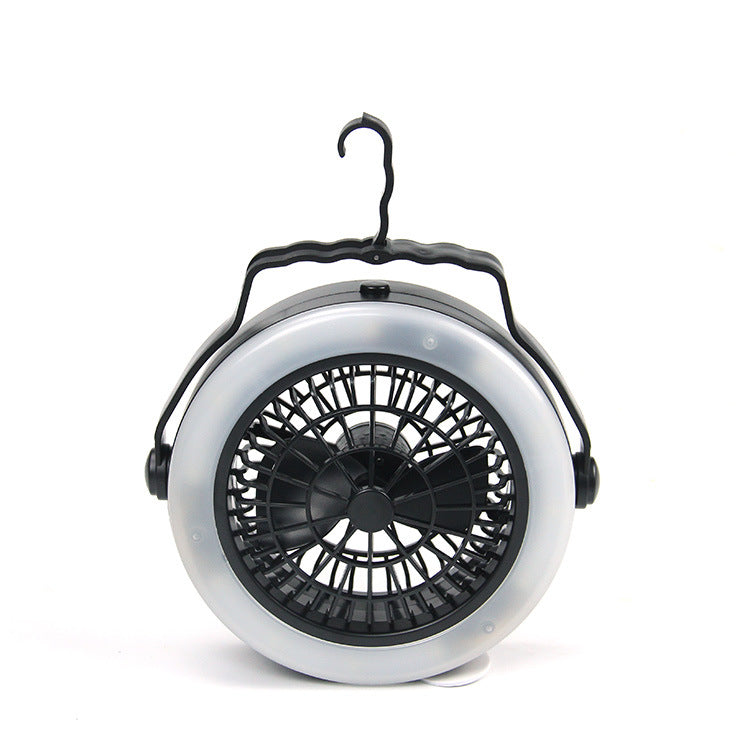
A rechargeable tent light and fan combo covers lighting and airflow in one item.
How the Categories Interlock
These categories are not independent. Tent capacity sets how many pads and bags you need. Pad dimensions decide whether two pads fit side by side in the tent floor. Stove fuel type decides which canisters you can buy near your destination. Cooler volume follows from group size and trip length. Fill the list in order, shelter and sleep first, then kitchen and water, then clothing and safety, and each choice narrows the next.
The 5 Most Important Things to Bring Camping
The five most important things to bring camping are shelter, a sleep system, water, food with a way to cook it, and weather-appropriate clothing. Everything else improves comfort; these five keep you safe and functional.
If you forget the rest, you'll be uncomfortable. Forget one of these, and the trip goes wrong. Pack them first, then add comfort items.
Weight, Packed Size, and How You'll Haul It
Weight only matters relative to how you travel. Car camping forgives bulky gear. Backpacking punishes every extra pound, and packed size determines whether gear fits your pack at all.
Weigh your full kit before the trip. If you're parking at a site, comfort wins, and a folding cot with a soft pad beats a thin pad for a bad back.
The Most Forgotten Camping Items and How to Catch Them
The most forgotten camping items are stakes, a lighter, toiletries, a can opener, and spare batteries. None are glamorous, and all are annoying to live without.
Build a permanent gear bin with a printed checklist taped inside the lid. Restock it after every trip, not before. A pre-packed bin catches forgotten items before they become a problem at the campsite.
Check Compatibility and Safety Specs Before You Pay
Compatibility and safety specs decide whether gear works together and holds up in weather. Most buying mistakes are specification mistakes: a bag rated for the wrong temperature, a pad with too little insulation, a stove that takes a fuel you can't buy locally. Check these before paying, not after the first storm.
Read Temperature Ratings Correctly
Sleeping bag ratings follow a comfort, limit, and extreme convention. The comfort rating is the temperature at which an average sleeper stays comfortable; the limit rating assumes a warm sleeper; the extreme rating is a survival figure, not a comfort target. Buy to the comfort rating for the coldest night you expect, and remember that ratings assume you are wearing a base layer and sleeping on a pad with adequate insulation.
Match Pad Insulation to Ground Temperature
A sleeping pad's R-value measures resistance to heat loss. Roughly R-2 suits mild summer nights, R-3 to R-4 covers three-season camping, and R-5 and up is for cold ground or winter. If you pair a cold-weather bag with a summer pad, the pad becomes the weak link. Check that pad dimensions also fit inside the tent floor: two 25-inch-wide pads need at least 50 inches of interior width, and tent floors are often narrower at the foot than the head.
Confirm Stove and Fuel Compatibility
Stoves run on three common fuels: isobutane canisters, liquid white gas, and propane. Confirm the stove accepts the canisters available near your destination, and check the connection type, many canister stoves use a threaded valve, while some use a proprietary or pierceable canister. Never run a fuel-burning stove inside a tent, even in the vestibule; carbon monoxide builds without smell (the CDC). Keep flames and stoves outside the tent, since no fabric tent is fireproof.
Check Weather Resistance and Ventilation
Look for a tent's hydrostatic head rating, which measures how much water pressure the fabric resists before leaking: around 1,200 mm to 1,500 mm handles light rain, while 3,000 mm and up suits sustained storms. Seams should be taped or sealed, and the rainfly should reach low enough to cover the walls. Ventilation matters as much as waterproofing, a tent that traps moisture leaves you wet from condensation even when no rain gets in.
Verify Fit and Footprint Compatibility
Match the footprint to your exact tent model; a footprint that is too large channels rain under the floor, and one that is too small leaves the floor exposed.
Watch out: a sleeping bag's temperature rating and a pad's R-value are tested separately, so a cold-weather setup only performs as rated when the two are matched to the same conditions.
Most buying mistakes are specification mistakes, so check these figures before you pay.
| Spec | Value | Note |
|---|---|---|
| Sleeping pad R-value, mild summer | About R-2 | Suits mild summer nights |
| Sleeping pad R-value, three-season | R-3 to R-4 | Covers three-season camping |
| Sleeping pad R-value, cold or winter | R-5 and up | For cold ground or winter |
| Tent hydrostatic head, light rain | 1,200 mm to 1,500 mm | Handles light rain |
| Tent hydrostatic head, storms | 3,000 mm and up | Suits sustained storms |
| Sleeping bag rating margin | 10 to 15 degrees below forecast low | Margin for cold snaps and altitude |
| Two pads in a tent | At least 50 inches interior width | Two 25-inch-wide pads |
| Stove fuels | Isobutane canisters, liquid white gas, propane | Confirm canisters available near destination |
Build Your Gear Plan With FieldToStream
Choosing camping equipment gets easier when you start with the trip and fill categories in order.
We prioritize items stocked in U.S. warehouses for faster delivery and provide honest product explanations alongside responsive, personal customer service.
Get started with FieldToStream and build a camping kit that fits the trips you actually take.
Ready to gear up without guessing?
Frequently Asked Questions
What camping gear should a beginner buy first?
Start with the sleep system and shelter, because a cold or wet night ends trips early. That means a tent sized for your group, a sleeping bag rated for the lowest temperature you expect, and a sleeping pad with enough insulation for the ground you'll sleep on. After those, add a camp stove and fuel, a headlamp, a first-aid kit, and a cooler or food storage bin. Rent or borrow the big items for your first two trips so you learn what you actually want before spending on camping equipment.
What are the 5 most important things to bring camping?
Shelter, sleep insulation, water, food with a way to cook it, and light plus first aid. Those five cover survival and comfort on almost any trip. A tent keeps weather off you, a rated sleeping bag and pad keep your body temperature stable overnight, and water matters more than food in an emergency. A camp stove and cooler handle meals, and a headlamp plus a stocked first-aid kit handle the situations you can't plan for. Everything else on a camping equipment list is an upgrade to those five.
Which camping items do people most often forget?
The most forgotten camping items are small, cheap, and annoying to replace at a campsite: stakes and a mallet, a lighter or matches in a waterproof container, extra batteries, trash bags, a can opener, and a repair kit for your tent. People also forget layers for a cold night and a dry bag for wet clothes. Pack a printed checklist and run through it while loading, not after you've driven away. Keep a dedicated gear bin so these items stay with the rest of your equipment.
How do I choose a tent for camping?
Match tent capacity to sleepers plus gear, not just people. A three-person tent fits three adults shoulder to shoulder with little room for bags, so groups often size up. Check the season rating: a three-season tent handles spring through fall, which covers most camping. Look at weather resistance (coated fly, taped seams), ventilation through mesh panels, and ease of setup with color-coded poles. FieldToStream's Trail 43 Convertible Tent converts between three- and four-person layouts, so one shelter covers both a couple's trips and family weekends.

Sample Block Quote
Praesent vestibulum congue tellus at fringilla. Curabitur vitae semper sem, eu convallis est. Cras felis nunc commodo loremous convallis vitae interdum non nisl. Maecenas ac est sit amet augue pharetra convallis nec danos.
Sample Paragraph Text
Praesent vestibulum congue tellus at fringilla. Curabitur vitae semper sem, eu convallis est. Cras felis nunc commodo eu convallis vitae interdum non nisl. Maecenas ac est sit amet augue pharetra convallis nec danos dui.
Cras suscipit quam et turpis eleifend vitae malesuada magna congue. Damus id ullamcorper neque. Sed vitae mi a mi pretium aliquet ac sed elitos. Pellentesque nulla eros accumsan quis justo at tincidunt lobortis denimes loremous. Suspendisse vestibulum lectus in lectus volutpat, ut dapibus purus pulvinar. Vestibulum sit amet auctor ipsum.
