


What Camping Safety Equipment Do You Need in 2026?
Last Updated: November 8, 2026
Quick Summary
Essential camping safety equipment in 2026 starts with a written plan, then a core kit of first-aid supplies, a headlamp with spare batteries, a whistle, map and compass, water treatment, and fire starter. Add a satellite messenger or personal locator beacon when you go beyond reliable cell coverage.
- Build a camping safety checklist around where you are going, who is coming, and what can go wrong.
- The 173-Piece Portable Camping First-Aid Kit costs $25.99 and covers basics for minor injuries.
- A whistle carries farther than your voice when you are tired or injured.
- Charge the 10,000mAh Solar Emergency Power Bank by USB before you leave and treat solar as a top-up.
- Store food in sealed containers or your vehicle, never in your tent.
Table of Contents
- 1. The Camping Safety Checklist: Build Your Plan Before You Pack
- 2. Camping First Aid Kit: The 173-Piece Kit That Covers the Basics
- 3. Camping Emergency Kit: Signaling, Power, and Shelter Backups
- 4. Lighting and Navigation: Headlamps, Whistles, and Backup Power
- 5. Water, Hydration, and Safe Drinking Water on the Trail
- 6. Fire Safety and Wildlife Precautions at the Campsite
- 7. Family Camping Checklist: Gear That Works for Kids, Pets, and RV Life
- 8. Get Out There: Build Your 2026 Safety Kit with FieldToStream
- Frequently Asked Questions
1. The Camping Safety Checklist: Build Your Plan Before You Pack
Essential camping safety equipment in 2026 starts with a plan, not a shopping cart. The campers who stay safe are the ones who match their gear to the trip: a summer weekend at a state park needs a different kit than a fall backcountry hunt. Build a camping safety checklist before you pack a single item.
Start with three questions: Where are you going, who is coming, and what can go wrong? A family camping trip near a lake has different risks than a solo hike above tree line. Write the answers down, then build your kit around them.
A simple, tiered approach works well:
- Core layer (every trip): first-aid kit, headlamp plus spare batteries, whistle, map and compass, water treatment, fire starter, weather-appropriate clothing.
- Risk layer (by trip type): signaling mirror for remote areas, emergency blanket for cold nights, extra water storage for dry country.
- Group layer (family or RV): pet supplies, kids' gear, backup power for devices.
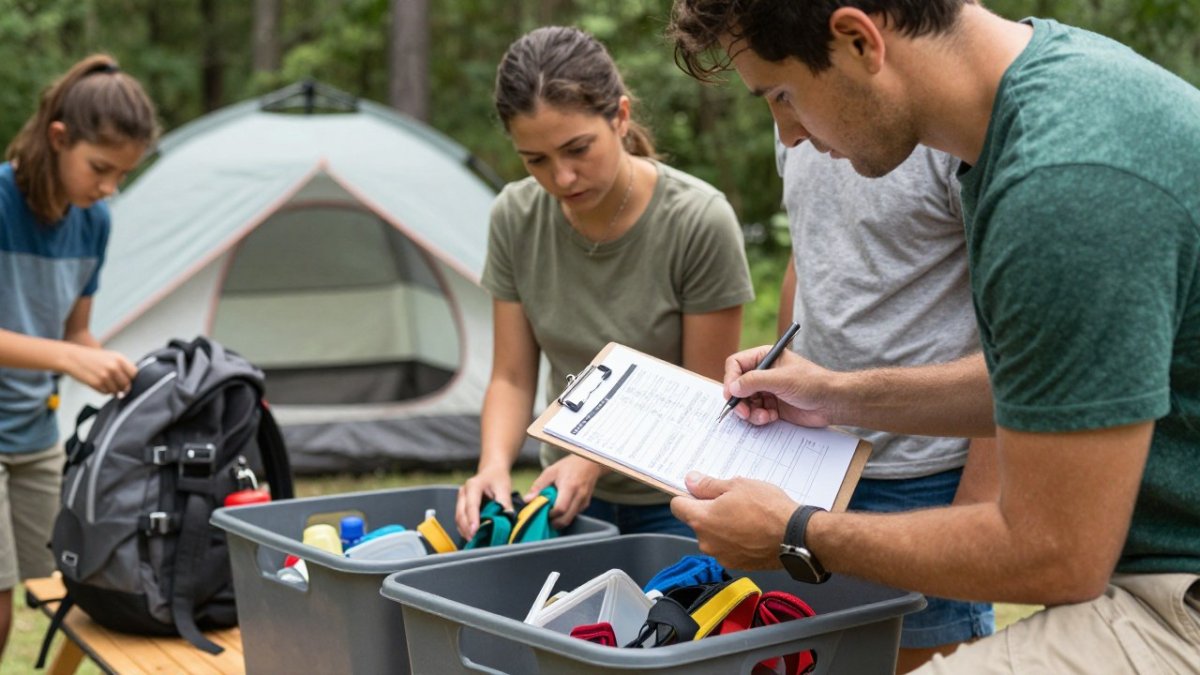
Watch out: the most common mistake is packing for the trip you imagined, not the weather forecast you actually have. Check the forecast the morning you leave and adjust clothing and shelter gear accordingly.
That plan is the foundation. Next, we'll walk through the gear that belongs in it, starting with the item you hope never to open.
2. Camping First Aid Kit: The 173-Piece Kit That Covers the Basics
A camping first aid kit is the one piece of safety equipment you should never leave behind. The 173-Piece Portable Camping First-Aid Kit packs adhesive bandages in multiple styles, first-aid tape, scissors, tweezers, safety pins, a cold pack, and an emergency blanket into one portable bag.

At $25.99, it covers the basics for camping, hiking, fishing, road trips, and RV use. The kit is a starting point, not a finish line: review the contents when it arrives, replace used or expired items, and add any personal medications you need.
Best for: families and RV travelers who want one organized kit for minor injuries. Skip if: you have specific medical needs that require a custom kit.
One more thing worth saying plainly: a first-aid kit does not replace training or professional care. If you have never taken a basic first-aid course, that knowledge matters more than any gear on this list.
3. Camping Emergency Kit: Signaling, Power, and Shelter Backups
A camping emergency kit answers one question: if things go wrong, can you call for help, signal your location, stay warm, and keep a device charged? Most gear lists stop at naming a whistle and a power bank. The part that actually saves trips is the communication plan behind them.
Start with coverage reality. Cell service can be unreliable or absent once you leave populated areas. Before you leave, check your carrier's coverage map for the specific area, tell a trusted contact your itinerary and expected return time, and set a check-in deadline. A written trip plan left with someone at home is free and works when nothing else does.
For two-way communication beyond cell range, the practical options are satellite messengers and personal locator beacons. Choose based on whether you want routine check-ins (messenger) or a dedicated last-resort distress signal (beacon).
For local signaling, a compact whistle belongs in every pack. The 3-in-1 Outdoor Emergency Whistle at $8.99 is lightweight and easy to clip on, and a whistle carries farther than your voice when you are tired or injured. A signal mirror and a high-visibility emergency blanket extend that signal in daylight and at night.

For power, the 10,000mAh Solar Emergency Power Bank at $24.95 gives you dual USB outputs, an integrated LED flashlight, and a built-in compass. Charge it by USB before you leave; treat the small solar panel as an emergency top-up, not your main source. Store it at partial charge for long-term storage, and top it off before every trip.
An emergency reflective sleeping bag or mat provides a lightweight emergency barrier. It is emergency equipment, not a substitute for an insulated cold-weather sleeping bag.
Watch out: a power bank and a whistle are not a communication plan. If you are going beyond reliable cell coverage, plan for a separate way to communicate before you leave.
Here are the emergency kit items the article names, with their prices and roles.
| Item | Price | Role |
|---|---|---|
| 3-in-1 Outdoor Emergency Whistle | $8.99 | Lightweight local signaling, clips on |
| 10,000mAh Solar Emergency Power Bank | $24.95 | Dual USB outputs, LED flashlight, built-in compass |
| Emergency reflective sleeping bag or mat | Not stated | Lightweight emergency barrier, not a sleeping bag substitute |
| Satellite messenger | Not stated | Routine check-ins beyond cell range |
| Personal locator beacon | Not stated | Dedicated last-resort distress signal |
Prices of camping safety gear items
4. Lighting and Navigation: Headlamps, Whistles, and Backup Power
Lighting and navigation are where cheap gear fails first. A dead flashlight on a dark trail is a genuine hazard, so buy for reliability and carry a backup.
The Explorer HL-10 Headlamp at $145.95 offers up to 2,500 max lumens, over 100 meters of throw, white, red, and IR modes, and magnetic charging. For hands-free camp lighting and night navigation, it is a strong option in our catalog.

Best for: backcountry trips, hunting, and anyone who hikes after dark. Skip if: you only need a light for short walks around a developed campground.
Pair your headlamp with a paper map and compass, and learn to use them before you need them. The power bank's built-in compass is a handy backup, but it is not a substitute for knowing how to navigate.
5. Water, Hydration, and Safe Drinking Water on the Trail
Safe drinking water is the safety item campers underestimate most. Carry more than you think you need, and always have a treatment plan for refills. Dehydration and waterborne illness are both preventable, and both end trips early.
Plan your water in three parts: capacity, access, and treatment. Capacity is what you carry. Access is where you can refill. Treatment is how you make refill water safe. Most campers plan the first and skip the other two.
The 2.5L Insulated Hydration Backpack at $42.99 holds roughly 85 fl oz in a BPA-free TPU bladder, with an insulated compartment that slows temperature change and a drinking hose for hands-free sipping. It weighs about 22 oz. Carry enough water for the full day plus a reserve.
Best for: hikers and cyclists who want water accessible without stopping. Skip if: you are car camping with a cooler and a water jug.
The insulation slows warming; it does not refrigerate water. Clean and dry the bladder, hose, and bite valve after every trip.
For refills from streams or lakes, choose a treatment method and know its limits.
6. Fire Safety and Wildlife Precautions at the Campsite
Campfire safety and wildlife precautions are habits, not products. Keep fires small, never leave them unattended, and drown them completely before you sleep or leave.
For wildlife, store food in sealed containers or your vehicle, never in your tent. Keep pets leashed and check them for ticks after every hike. A compact repellent spray helps, but pair it with long sleeves, long pants, and a full body check afterward.
For campfire starting, pack a reliable fire starter and a multi-tool. Keep a camp axe for splitting small wood, and never cut standing trees.
7. Family Camping Checklist: Gear That Works for Kids, Pets, and RV Life
Family camping works when one kit serves everyone. Build a family camping checklist around three groups: kids, pets, and the RV itself.
- Kids: their own headlamp, weather-appropriate layers, and a whistle they know how to use.
- Pets: leash, food, water bowl, tick checks, and a familiar blanket.
- RV life: backup power, a first-aid kit stored in a fixed spot, and a compact survival kit for the tow vehicle.
The 31-Piece Emergency Survival Gear Kit at $44.99 is a compact case of practical tools for camping, road trips, and emergency preparedness. Review the product photos for exact contents, since batches vary slightly.
8. Get Out There: Build Your 2026 Safety Kit with FieldToStream
The best safety kit is the one you actually build, check, and know how to use. Start with the core layer, add gear for your specific trip risks, and inspect everything before each season.
FieldToStream is a veteran-owned small business, and we prioritize items stocked in U.S. warehouses for faster delivery. We provide honest product explanations and personal customer service.
Get started with FieldToStream and build a kit that lets you explore with confidence.
The challenge is simple: most campers pack gear they never learn to use. Pick one item from this list, learn it properly, and add the next one before your next trip. FieldToStream carries first-aid kits, headlamps, hydration packs, and emergency power with honest product details and personal service. Get started with FieldToStream and head out prepared.
Frequently Asked Questions
What safety equipment should you bring camping?
At minimum, pack a camping first aid kit, a signaling whistle, a headlamp or flashlight with spare batteries, and an emergency reflective blanket or shelter. Add a camping emergency kit with backup power, and plan for water treatment if you will be away from potable water. For families, a family camping checklist should include tick repellent and a way to check kids and pets for ticks after hikes. FieldToStream's 173-Piece Portable Camping First-Aid Kit at $25.99 covers many basic injury needs.
What should be in a family camping safety kit?
A family camping checklist for safety should include a first aid kit with bandages, tape, scissors, tweezers, and an emergency blanket; a whistle for each child; a headlamp or flashlight; tick repellent; and a power bank for phones. The FieldToStream 31-Piece Emergency Survival Gear Kit at $44.99 adds compact tools, while the 10,000mAh Solar Emergency Power Bank at $24.95 provides backup device charging. Review contents before each trip and replace used or expired items.
How do you use and maintain camping safety equipment?
Check your gear before every trip. Open the first aid kit, confirm supplies are stocked, and replace anything used or expired. Charge the headlamp and power bank fully, and test the whistle. A camping safety checklist that includes a gear check prevents surprises in the field.
What should be in a camping emergency kit for signaling and power?
A camping emergency kit should include a whistle, a mirror or reflective surface, a headlamp with strobe or SOS modes, and a charged power bank. The 3-in-1 Outdoor Emergency Whistle at $8.99 and the Outdoor Keychain Whistle at $3.99 are compact signaling options. The 10,000mAh Solar Emergency Power Bank at $24.95 has dual USB outputs and a built-in compass. Charge it by USB before your trip; the small solar panel is for emergency top-ups only.
What are the most important things to bring camping in 2026?
For 2026, prioritize camping safety gear by risk: a first aid kit, signaling whistle, headlamp, emergency shelter, and backup power. Add water treatment and tick repellent for wooded areas. The FieldToStream 173-Piece Portable Camping First-Aid Kit ($25.99), the 3-in-1 Outdoor Emergency Whistle ($8.99), and the Explorer HL-10 Headlamp ($145.95) cover core needs. Use a camping safety checklist to confirm each item before you leave.

Sample Block Quote
Praesent vestibulum congue tellus at fringilla. Curabitur vitae semper sem, eu convallis est. Cras felis nunc commodo loremous convallis vitae interdum non nisl. Maecenas ac est sit amet augue pharetra convallis nec danos.
Sample Paragraph Text
Praesent vestibulum congue tellus at fringilla. Curabitur vitae semper sem, eu convallis est. Cras felis nunc commodo eu convallis vitae interdum non nisl. Maecenas ac est sit amet augue pharetra convallis nec danos dui.
Cras suscipit quam et turpis eleifend vitae malesuada magna congue. Damus id ullamcorper neque. Sed vitae mi a mi pretium aliquet ac sed elitos. Pellentesque nulla eros accumsan quis justo at tincidunt lobortis denimes loremous. Suspendisse vestibulum lectus in lectus volutpat, ut dapibus purus pulvinar. Vestibulum sit amet auctor ipsum.