


Buy Reliable Outdoor Survival Gear: 2026 Guide
Table of Contents
- What Makes Outdoor Survival Gear Reliable?
- Your Complete Survival Gear Checklist for Any Trip
- Water Filtration for Camping: What Actually Works
- Emergency Shelter for Camping: Tarps, Bivvies, and Sleeping Systems
- Camping First-Aid Kit: What to Pack and Why It Matters
- Budget Tiers and Total Cost of Ownership
- Maintenance and Service Life: Making Your Gear Last
- Frequently Asked Questions
Last Updated: October 7, 2026
What Makes Outdoor Survival Gear Reliable?
Reliability in outdoor survival gear means the item performs its stated job in bad weather, after months in storage, and without a backup plan. When you buy reliable outdoor survival gear, you are paying for tested materials, honest ratings, and construction that survives real abuse. At FieldToStream, a veteran-owned small business, we select gear the same way we packed for deployments: does it work when everything else has failed?

The gap between dependable gear and cheap gear rarely shows up on the first trip. It shows up on the fourth, in the rain, when a zipper jams or a strap snaps. That is the moment reliability stops being a marketing word and becomes a safety issue.
Materials, Testing, and Real-World Durability
Materials decide most of the outcome. Look for these markers before you spend:
- Rated fabrics over vague claims. A tarp with a stated PU 2000 mm water-resistance rating tells you more than "waterproof" ever will.
- Named hardware. YKK zippers, aluminum stakes, and aircraft-grade aluminum bodies signal a maker who expects the product to be used hard.
- Published test standards. Sleeping bags tested to ISO 23537-1 methodology give you comparable temperature ratings instead of guesswork.
- Field-serviceable designs. Replaceable bladders, spare O-rings, and standard battery sizes mean you can repair gear instead of replacing it.
Your Complete Survival Gear Checklist for Any Trip
A survival gear checklist is a written list of the items your trip actually requires, organized by function so nothing critical gets left in the garage. Build the list around five jobs: water, shelter, warmth, light, and first aid.
Most gear failures are packing failures, not product failures. People own good equipment and still leave it home. A checklist fixes that faster than any upgrade.
Quick-reference checklist:
| Function | Core Item | Why It Matters |
|---|---|---|
| Water | Filtration or purification | Dehydration degrades judgment first |
| Shelter | Tarp or bivvy | Wind and rain drive hypothermia |
| Warmth | Rated sleeping bag | Overnight cold is the real risk |
| Light | Headlamp plus spare | Hands-free light for tasks and navigation |
| First aid | Portable kit | Minor injuries become major without supplies |
| Repair | Paracord and tape | Fixes broken straps, poles, and tarps |
The Minimum Viable Kit
The minimum viable kit is the smallest set of gear that keeps you safe for one unplanned night outdoors. For most day hikers and car campers, that means water treatment, a tarp, an emergency blanket, a headlamp, a first-aid kit, and cordage.

Our 31-Piece Emergency Survival Gear Kit ($44.99) covers the tool side of that list in one compact case that fits in a vehicle or backpack. It supports basic preparedness, but it is not a substitute for training, a first-aid kit, navigation equipment, or emergency communication.
If you want one purchase to cover the widest range of basics, our Camouflage 64 Piece Complete Survival Backpack ($149.99) bundles 32 food servings, water pouches, a 37-piece first-aid kit, a portable stove with fuel tablets, a stainless steel cup, a flashlight, waterproof matches, a Mylar blanket, and an emergency poncho in a durable camo pack.

Water Filtration for Camping: What Actually Works
Water filtration for camping works when the method matches the water source. Clear moving streams suit a filter; questionable or stagnant water needs purification as well, because filters remove particles and many organisms but do not neutralize everything.
Three approaches cover nearly every trip:
- Squeeze or pump filters remove sediment and common organisms fast. Best for clear backcountry sources.
- Chemical purification treats viruses and is lightweight. Best as a backup when filters clog.
- Boiling kills pathogens reliably and needs no consumables. Best in camp, when you have fuel and time.
Carry two methods. Filters clog, tablets expire, and stoves run out of fuel. A hands-free option helps on the move: our 2.5L Insulated Hydration Backpack ($42.99) holds roughly 85 fl oz in a BPA-free TPU bladder with an insulated compartment that slows temperature change. Insulation slows warming; it does not refrigerate water. Clean and dry the bladder, hose, and bite valve after every trip.
Emergency Shelter for Camping: Tarps, Bivvies, and Sleeping Systems
Emergency shelter for camping is any setup that blocks wind and rain while you wait out weather or sleep.
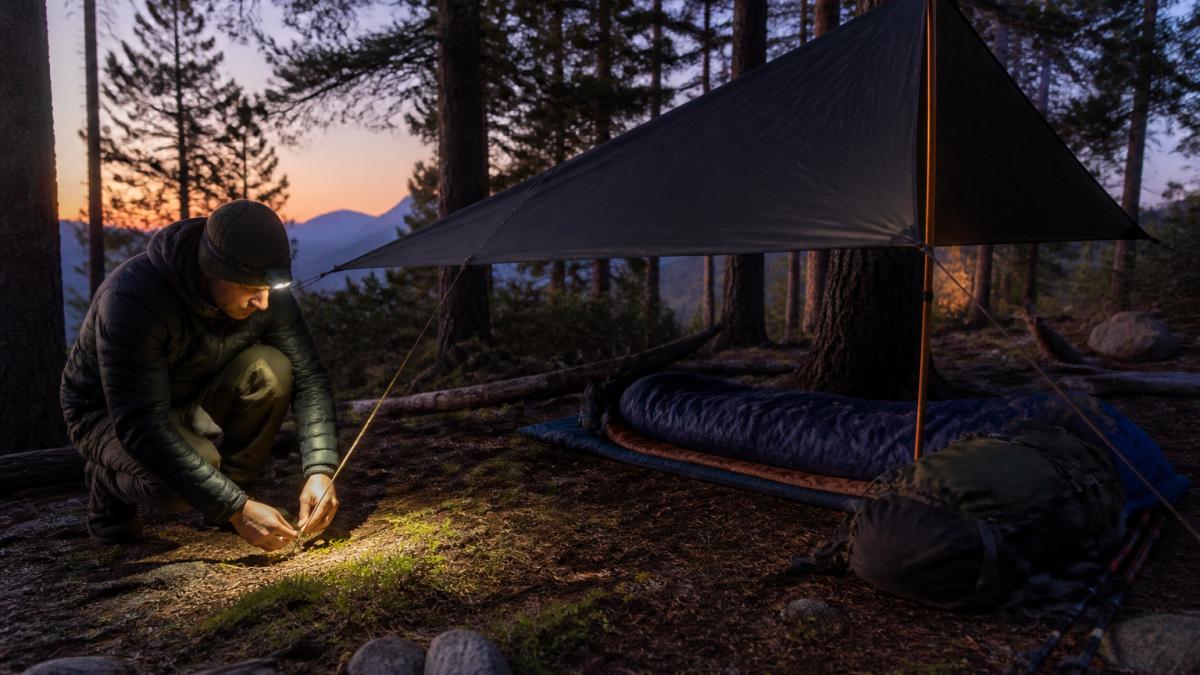
Start with coverage. Our PU 2000mm Camping Tarp Shelter ($53.99) uses 210D Oxford fabric with a silver-coated interior and a stated PU 2000 mm rating, and ships with six nylon ropes and six aluminum stakes.
Then add warmth. The Settler 3-Season Synthetic Sleeping Bag ($199.95) is independently tested to ISO 23537-1 methodology with a 29°F comfort rating and an 18°F lower-limit rating.
Camping First-Aid Kit: What to Pack and Why It Matters
A camping first-aid kit matters because help is far away and small problems compound fast. A cut that would be trivial at home becomes trip-ending when it happens two hours from the trailhead.
Build or buy a kit that covers these categories:
31-Piece Emergency Survival Gear Kit →
- Wound care: adhesive bandages in multiple sizes, gauze, tape
- Tools: scissors, tweezers, safety pins
- Cold and exposure: instant cold pack, emergency blanket
- Personal: prescription medications and any allergy supplies you need
Our 173-Piece Portable Camping First-Aid Kit ($25.99) covers the basics in a portable bag sized for a pack, RV, or vehicle. Review the full contents when it arrives, replace anything used or expired, and add your own medications. No kit replaces professional medical care, first-aid training, or an emergency communication plan.
Budget Tiers and Total Cost of Ownership
Total cost of ownership beats sticker price every time. A cheap tarp replaced twice costs more than one rated tarp that lasts, and gear that fails in the field carries a cost no receipt shows.
Three variables drive that number:
- Purchase price. The obvious one, and the least important on its own.
- Service life. How many seasons the item survives before it must be replaced or repaired.
- Failure cost. What it costs when the item fails: a ruined trip, a replacement bought at full price on the road, or in the worst case, a safety incident.
A simple way to compare is cost per season.
Here is how our own lineup maps to three budget tiers:
| Tier | Example Setup | Approximate Cost | Best For |
|---|---|---|---|
| Starter | 31-piece kit plus first-aid kit | $70.98 | Day trips and car camping |
| Core | Tarp, sleeping bag, paracord | $263.93 | Weekend camping in three seasons |
| Complete | 64-piece backpack plus tarp | $203.98 | Emergency prep and base camp |
Prices reflect our listed catalog and can change. The pattern to notice: the middle tier costs the most because shelter and sleep are where money buys real safety. Spend there first, then upgrade tools and lighting.
Maintenance intervals change the math more than most buyers expect. A few rules of thumb:
- Sleeping bags: air-dry after every trip, wash per the manufacturer's instructions once or twice a season with use, and expect a quality synthetic bag to hold loft for several seasons with care. Store loose, never compressed.
- Tarps: inspect grommets and seams each season, re-waterproof as the coating wears, and retire any tarp with UV brittleness or torn tie-outs.
- Water filters: backflush or clean according to the maker's schedule, replace cartridges when flow drops noticeably, and never let a filter freeze with water inside.
- Headlamps and flashlights: charge before every trip, store batteries out of the device for long-term storage, and replace rechargeable cells when runtime drops noticeably.
- First-aid kits: check expiration dates twice a year and replace anything used immediately.
- Cordage: inspect for abrasion and UV damage, and retire any line that has been shock-loaded or cut.
Warranty and repairability belong in the same calculation. A product with replaceable parts, standard battery sizes, and a stated warranty is usually cheaper over five years than a sealed item that must be thrown away.
Maintenance and Service Life: Making Your Gear Last
Gear lasts when you inspect, clean, and store it deliberately. Most service life is lost to storage, not use: mildew in a packed-wet sleeping bag, corroded batteries left in a flashlight, UV damage on a tarp left pitched all season.
A simple routine keeps equipment ready:
- After every trip: air-dry anything that touched water, including tarps, bags, and hydration bladders.
- Monthly: check batteries, inspect straps and zippers, confirm first-aid supplies are stocked.
- Seasonally: re-waterproof fabrics as needed, replace expired items, and test light and stove function.
- Before storage: loosen compression sacks so insulation keeps its loft.
Lighting deserves its own habit. Our Explorer HL-10 Headlamp ($145.95) runs on a rechargeable battery with magnetic charging and an IPX8 waterproof rating. The E9R GEN4 Tactical EDC Flashlight ($139.95) offers 2,550 lumens in a compact body with IPX8 waterproofing and 2-meter impact resistance. Charge both before every trip; a dead light is the same as no light.
Carry it all in something built for the load. The 42L Tactical Backpack Bag with USA Patch ($69.99) uses waterproof, rip-proof fabric with MOLLE webbing and adjustable compression straps.
Frequently Asked Questions
What survival gear should every camper carry?
Every camper should carry a basic survival gear checklist that includes water filtration for camping, fire-starting tools, emergency shelter for camping, a camping first-aid kit, navigation equipment, and a reliable light source. A compact kit like the 31-Piece Emergency Survival Gear Kit ($44.99) covers many essentials, while the Camouflage 64 Piece Complete Survival Backpack ($149.99) adds food, water pouches, and a stove. Always review contents before each trip and replace used or expired items.
How do I choose reliable outdoor survival gear?
Look for specific, verifiable specifications rather than vague claims. Check materials (like 210D Oxford fabric on the PU 2000mm Camping Tarp Shelter), water-resistance ratings, and independent testing standards (the Settler sleeping bag is tested to ISO 23537-1). Read supplier-listed contents carefully, and prioritize gear from brands that disclose weights, dimensions, and limitations. FieldToStream selects products stocked in U.S. warehouses and provides honest explanations so you know exactly what you are buying.
Is it better to build a survival kit or buy one?
Buying a pre-built kit like the 31-Piece Emergency Survival Gear Kit ($44.99) or the Camouflage 64 Piece Complete Survival Backpack ($149.99) gives you a fast, organized starting point, especially if you are new to camping. Building your own lets you customize every item to your specific trip, climate, and skill level. Many campers start with a kit and then add personal medications, extra water filtration for camping, and navigation tools. Either way, review contents and practice using each item before you rely on it.
What should be in a basic outdoor survival kit?
A basic outdoor survival kit should include: water purification or filtration, fire-starting tools (waterproof matches, lighter, or ferro rod), emergency shelter (tarp or bivvy), a first-aid kit, a multi-tool or knife, paracord, a headlamp or flashlight, and navigation equipment. The 31-Piece Emergency Survival Gear Kit covers many of these basics, while the 173-Piece Portable Camping First-Aid Kit ($25.99) handles medical needs. Add a water filter and a tarp shelter for camping to round out your kit.
How often should I inspect or replace survival gear?
Inspect your survival gear before every trip and do a full inventory at least twice a year. Check expiration dates on food, water pouches, and medications; test flashlights and headlamps; inspect paracord for fraying; and verify that first-aid supplies are fully stocked. Replace batteries, fuel tablets, and any damaged items immediately. The Settler 3-Season Synthetic Sleeping Bag and PU 2000mm Camping Tarp Shelter should be checked for rips, seam damage, and zipper function. Proper storage in a cool, dry place extends service life.
Reliable gear is not about spending the most. It is about knowing which items carry your safety and refusing to compromise there. FieldToStream stocks gear chosen by experienced outdoor enthusiasts and RV travelers, with products held in U.S. warehouses for faster delivery and honest explanations on every listing. If you are not sure where to start, our team answers real questions personally. Get out there with FieldToStream, and pack like the trip depends on it.
Sample Block Quote
Praesent vestibulum congue tellus at fringilla. Curabitur vitae semper sem, eu convallis est. Cras felis nunc commodo loremous convallis vitae interdum non nisl. Maecenas ac est sit amet augue pharetra convallis nec danos.
Sample Paragraph Text
Praesent vestibulum congue tellus at fringilla. Curabitur vitae semper sem, eu convallis est. Cras felis nunc commodo eu convallis vitae interdum non nisl. Maecenas ac est sit amet augue pharetra convallis nec danos dui.
Cras suscipit quam et turpis eleifend vitae malesuada magna congue. Damus id ullamcorper neque. Sed vitae mi a mi pretium aliquet ac sed elitos. Pellentesque nulla eros accumsan quis justo at tincidunt lobortis denimes loremous. Suspendisse vestibulum lectus in lectus volutpat, ut dapibus purus pulvinar. Vestibulum sit amet auctor ipsum.