


8 Tips for Fishing With Dogs: A Complete Guide
Last Updated: October 26, 2026
Quick Summary
The key to fishing with dogs is building obedience first: teach come, stay, and leave it at home before you ever reach the water. Then introduce gear and water gradually, keep your dog leashed near hooks and other anglers, and pack water, a life jacket, and a first aid kit.
- Practice recall in short sessions of five to ten minutes, twice a day.
- Keep tackle boxes latched and never leave a baited hook on the ground.
- Use a short 4-6 ft leash on crowded banks and a 15-30 ft long line in open water.
- Pack at least 1 quart of water per 20 lb of body weight for a half-day trip.
- Take a shade and water break every 20-30 minutes above 80°F.
Table of Contents
- Start With Obedience Training Before the First Cast
- Introduce Your Dog to Fishing Gear and Water Gradually
- Dog Fishing Safety: Hooks, Line, and Tackle Handling
- Leash or Off-Leash? Keeping Your Dog Close on the Bank
- Should Your Dog Wear a Life Jacket for Fishing?
- Heat, Hydration, and Water Safety on the Water
- Pack a Dog First Aid Kit for Fishing Trips
- Gear Up for Your Next Fishing Trip With Your Dog
- Frequently Asked Questions
Start With Obedience Training Before the First Cast
A dog that won't come when called has no business near a fishing hole. That's the blunt truth behind every good set of tips for fishing with dogs.
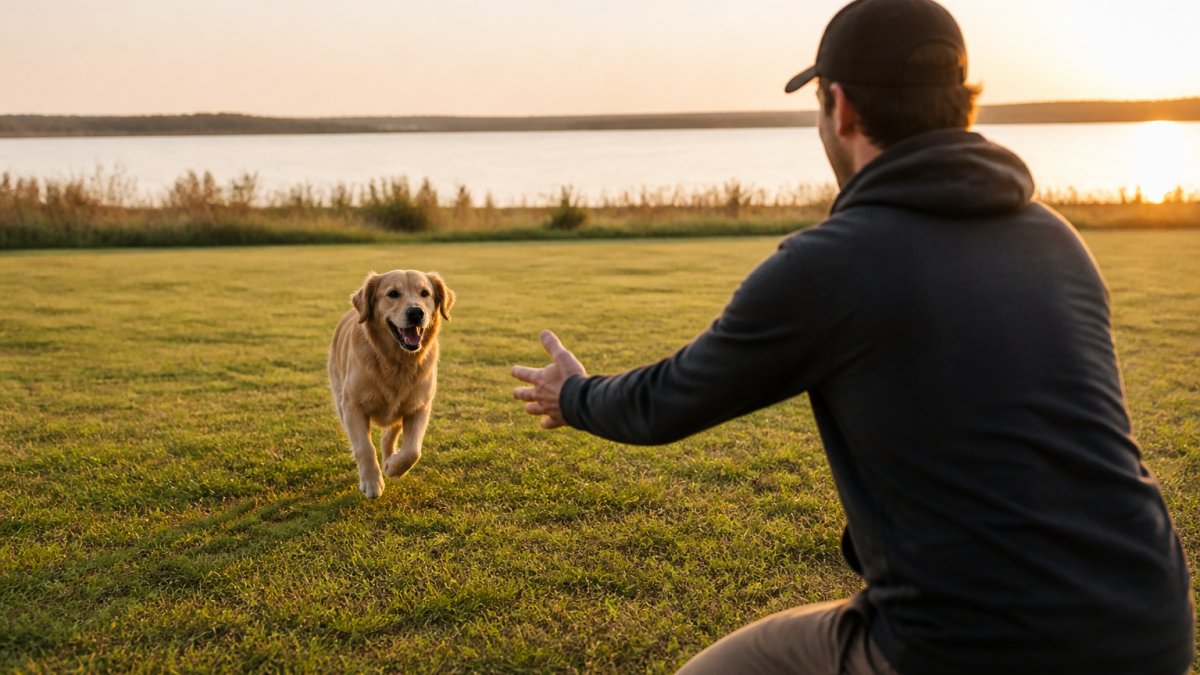
Start with three commands: come, stay, and leave it. Practice recall in a wide open field first, then add distractions. A fishing companion that ignores a thrashing fish is trained, not born.
Keep sessions short. Five to ten minutes, twice a day, beats one long drill. Start young if you can, but an older dog learns these commands too.
Introduce Your Dog to Fishing Gear and Water Gradually
New sights and smells overwhelm a puppy fast. Introduce your dog to fishing equipment in stages, at home, before the water.
Water comes next. Begin at a shallow, calm edge. Let your dog wade and get used to the bank.
A common mistake is rushing the first trip. Build calm behavior around tackle and water first. The dog learns the fishing hole is a normal, safe place.
Dog Fishing Safety: Hooks, Line, and Tackle Handling
Dog fishing safety starts with keeping sharp things away from curious noses. Hooks, line, and lures are the biggest risks on any bank.
Follow these rules:
- Keep tackle boxes closed and latched
- Never leave a baited hook on the ground
- Store loose line in a sealed bag, not the grass
- Set rods down where the dog can't step on them
- Watch for hooks during every cast and retrieve
If a hook catches your dog, don't pull it out blindly. Contact a vet. A dog first aid kit for fishing trips should include a way to cover the wound while you get help.
Leash or Off-Leash? Keeping Your Dog Close on the Bank
Most dogs should stay leashed near water and other anglers. Off-leash only works in a wide open, low-traffic spot with rock-solid recall. When in doubt, clip the leash on.
A hands-free setup helps here. It frees your hands for casting while keeping your dog close. Our hands-free waist belt and bungee leash does exactly that, with a shock-absorbing bungee that softens sudden pulls.

Here's a simple decision guide:
| Situation | Best Choice | Why |
|---|---|---|
| Crowded bank | Short leash (4-6 ft) | Control near people and hooks |
| Calm, open water | Long line (15-30 ft) or off-leash | Room to move, easy recall |
| Wildlife nearby | Leash | Stops chasing and prey drive |
| Boat fishing | Fixed spot or tether | Keeps dog from the edge |
| Strong prey drive | Long line plus e-collar training | Backup control when recall fails |
When your dog pulls, barks, or ignores recall
Obedience on a lawn is not obedience on a bank. Most trips go sideways in predictable ways, so plan for them:
- Pulling toward the water. Stop walking the moment the leash goes tight. Wait for slack, then move. Reward the slack with a treat or a release word. A front-clip harness reduces pulling leverage better than a back-clip harness for most dogs.
- Barking at other anglers or dogs. Increase distance until the dog can look at the trigger without reacting, then reward calm. This is the same threshold work used in basic reactivity training, close the gap only when the dog stays quiet.
- Refusing recall near a fish or a splash. Never call a dog you know won't come; go get the dog instead. Every ignored recall teaches the dog that "come" is optional. Practice recall on a long line with a high-value reward before trusting it near water.
- Chasing birds, squirrels, or another dog's catch. A long line plus a verbal interrupt ("leave it") is the minimum. For dogs with strong prey drive, a remote training collar used under a trainer's guidance is a common backup, not a substitute for training.
- Bolting from the bank into the water. Use a fixed-length leash or tether at the water's edge, and teach a "wait" at the shoreline before every cast.
Leash rules you need to check before you go
Leash requirements vary by land manager, not just by state. Before you pick a spot, check the rules for the specific water and access point:
- State and local parks often require a leash of 6 ft or less and may ban dogs from swim beaches or fishing piers.
- National Wildlife Refuges and many federal recreation areas typically require leashes and may close sensitive areas to dogs entirely.
- Private land and leased access can set their own rules, ask before you park.
- Wildlife management areas may restrict dogs during hunting seasons or require them to be under physical control at all times.
A quick call to the managing agency or a look at the property's posted regulations saves a citation and a ruined trip. When rules and training conflict, the rules win.
Should Your Dog Wear a Life Jacket for Fishing?
Yes. A dog life jacket for fishing is worth it for any dog near deep or moving water, even strong swimmers.
Look for a snug fit, a sturdy grab handle, and bright color. Test it in shallow water before the trip.
Portable Dog Water Bottle with Drinking Trough →
Watch out: a life jacket is not a substitute for supervision. Keep your dog in sight around water at all times.
Heat, Hydration, and Water Safety on the Water
Hot days on the bank drain a dog fast. Bring more water than you think you need and offer it often. Never let your dog drink still, warm water full of algae.
A portable bottle makes hydration easy. Try our portable dog water bottle with drinking trough, or the smaller 11.2 oz travel bottle if you pack light. Both release water with one button and skip the separate bowl.


A practical pre-trip checklist
Most competitors stop at "bring water." A dog-specific packing list is the difference between a smooth trip and a vet visit. Pack this before every outing:
- Fresh water, at least 1 quart per 20 lb of body weight for a half-day trip, more in heat
- Collapsible bowl or bottle with trough
- 4-6 ft leash plus a 15-30 ft long line
- Dog life jacket fitted and tested in shallow water
- Waste bags (double the number you think you need)
- Paw protection, booties or balm for hot sand, gravel, and pavement
Heat stress: timing and rest breaks
Dogs cool mainly by panting, and flat-faced breeds, thick-coated breeds, and older dogs overheat faster. Plan around the heat rather than through it:
- Fish early morning or late evening when water and air are coolest.
- Take a shade and water break every 20-30 minutes in temperatures above 80°F.
- Wet the belly, paws, and armpits, not just the back, to speed cooling.
- Never leave a dog in a parked vehicle, even with windows cracked.
Watch for these warning signs:
- Heavy panting that won't slow down
- Wobbling or confusion
- Refusing water
- Bright red gums
Move to shade, offer cool water, and cool the belly and paws. For real heat stress, call your vet.
Cold water, currents, and the bank
A strong swimmer is not a safe swimmer in cold or moving water. Cold water saps strength quickly, and currents that look mild at the surface can pull a dog downstream.
- Test the water temperature with your hand before letting the dog wade. If it's uncomfortable to you, it's risky for a long swim.
- Keep dogs out of fast current, spillways, and tailraces below dams.
- Watch for undercut banks and slick algae-covered rocks, both are common slip-and-trap hazards.
- A life jacket with a grab handle lets you lift a tired dog out without leaning over the edge.
Life jackets: fit and use
A dog life jacket is worth it for any dog near deep or moving water, even strong swimmers. Look for a snug fit, a sturdy grab handle, and bright color. Test it in shallow water before the trip. A life jacket buys you time and gives you a handle to lift your dog out.
Watch out: a life jacket is not a substitute for supervision. Keep your dog in sight around water at all times.
Pack a Dog First Aid Kit for Fishing Trips
A dog first aid kit for fishing trips covers the cuts, hooks, and paw injuries that happen outdoors. Pack it before every trip and check it each season.
Include:
- Gauze and self-stick wrap
- Antiseptic wipes
- Tweezers and a hook cutter
- Paw balm and booties
- A muzzle or soft strap
- Vet contact info and a slip lead
- Benadryl only if your vet approves the dose
Store it in a waterproof bag. A calm dog and a stocked kit handle most bank-side scrapes.
Gear Up for Your Next Fishing Trip With Your Dog
Good training, a solid leash, and a stocked kit turn a chaotic outing into a calm one. That's the whole point of these tips for fishing with dogs: prepare the dog and the gear, then relax.
FieldToStream is a veteran-owned small business, and we pick gear for exactly these trips. Our products ship from U.S. warehouses, and we explain each item honestly so you know what you're getting.
Frequently Asked Questions
How do you keep a dog safe while fishing?
Keep your dog leashed or within immediate voice control near the water, and stay between your dog and the bank edge. Store hooks and lures in closed tackle boxes and never leave a baited rod unattended. Bring a portable dog water bottle so your dog stays hydrated, and check the weather before heading out. Supervise every moment near the water, and pack a first aid kit with tweezers and gauze in case of a hook injury.
Should a dog wear a life jacket while fishing?
Yes, especially if your dog will be near deep water, on a boat, or is a weak swimmer. A properly fitted dog life jacket for fishing keeps the head above water and gives you a handle to lift your dog back into a boat. Even strong swimmers tire quickly in cold water or heavy current. Measure your dog's chest girth and weight before buying, and test the fit on land first so your dog gets used to wearing it.
How do you train a dog to behave around fishing gear?
Start at home with gear laid out on the floor and reward your dog for ignoring it. Practice the leave it command with a rod and a closed tackle box, then repeat in a wide open field before trying it at the water. Keep training sessions short, end on a success, and never let your dog mouth a hook or bait. Consistent obedience work before the first trip makes fishing with dogs far calmer.
What should you pack for a fishing trip with a dog?
Pack a portable dog water bottle, a collapsible bowl, a leash or hands-free belt, a dog life jacket for fishing, waste bags, a towel, and a dog first aid kit with tweezers, gauze, and antiseptic. Bring shade, sunscreen for exposed areas, and a favorite toy or chew to keep your dog busy during slow fishing. A pre-trip checklist prevents forgotten items and keeps the whole outing safe and comfortable.
The difference between a great trip and a stressful one usually comes down to preparation. FieldToStream stocks practical, safety-focused gear for anglers and their dogs, from hands-free leashes to portable water bottles and first aid basics. Our team answers real questions and picks products we'd use ourselves. Get started with FieldToStream and head to the water with a calmer, safer fishing companion.

Sample Block Quote
Praesent vestibulum congue tellus at fringilla. Curabitur vitae semper sem, eu convallis est. Cras felis nunc commodo loremous convallis vitae interdum non nisl. Maecenas ac est sit amet augue pharetra convallis nec danos.
Sample Paragraph Text
Praesent vestibulum congue tellus at fringilla. Curabitur vitae semper sem, eu convallis est. Cras felis nunc commodo eu convallis vitae interdum non nisl. Maecenas ac est sit amet augue pharetra convallis nec danos dui.
Cras suscipit quam et turpis eleifend vitae malesuada magna congue. Damus id ullamcorper neque. Sed vitae mi a mi pretium aliquet ac sed elitos. Pellentesque nulla eros accumsan quis justo at tincidunt lobortis denimes loremous. Suspendisse vestibulum lectus in lectus volutpat, ut dapibus purus pulvinar. Vestibulum sit amet auctor ipsum.
