


Essential RV Gear for Families: The 2026 Checklist
Table of Contents
- Start With the RV Essentials Checklist for First-Time RVers
- RV Safety Gear Every Family Should Carry
- RV Storage and Organization Ideas That Save Space
- Essential RV Gear for Families: Kitchen, Sleeping and Bathroom
- RV Gear for Kids: Packing by Age and Trip Length
- Power, Leveling and Outdoor Comfort Gear for Families
- How to Prioritize Essential RV Gear for Families on a Budget
- Frequently Asked Questions
Last Updated: October 14, 2026
Start With the RV Essentials Checklist for First-Time RVers
The fastest way to ruin a family RV trip is discovering at the campground that you forgot the sewer hose. Essential RV gear for families comes down to hookup, safety, and comfort items.
Campground hookups vary: some offer full water, electric, and sewer; others give you a 30-amp pedestal and nothing else. Build your list for the worst case, not the brochure case.
Hookup Gear You Cannot Leave the Driveway Without
Hookup gear turns a parked trailer into a working home. Without it, you are dry camping whether you planned to or not.
- Drinking water hose rated for potable water, kept separate from any other hose
- Water pressure regulator to protect your rig's plumbing from high campground pressure
- Sewer hose kit with the correct bayonet fittings for your dump valves
A common mistake is buying one hose for everything. Keep a dedicated drinking water hose and never share it with the black tank rinse.
Water, Waste and Electrical Basics for New RV Owners
Water and waste handling is where new RV owners get humbled fastest. The CDC guidance on drinking water safety is a useful starting point for understanding what campground water can and cannot be trusted to do.
Inline filters reduce chlorine taste, odors, and sediment, but they do not make unsafe water potable. Check the filter's certified contaminant claims and service life.

RV Safety Gear Every Family Should Carry
Safety gear is the category families skip and later regret. It weighs almost nothing, fits in one bin, and covers scenarios you cannot plan around. Everyone in the rig, kids included, should know where it lives and what to do.
Every rig should carry an ABC-rated fire extinguisher, a carbon monoxide detector, a propane leak detector, and a basic tool kit.
First-Aid and Emergency Preparedness for Kids
A first-aid kit should be sized to your family, not to a generic list. The American Red Cross first-aid resources recommends reviewing your kit's contents before every trip and replacing anything used or expired.
A 173-piece portable kit covers the basics: bandages, tape, scissors, tweezers, a cold pack, and an emergency blanket. Add children's medications, prescriptions, and a written emergency contact card for each child, and walk older kids through where the kit lives.
Childproofing and Campsite Boundaries
A campground is not a playground, and its hazards differ from home. Before unhitching, walk the site with your kids and set hard boundaries: the pad edge, the fire ring, and the road.
Inside the rig, treat the same hazards as home. Cabinet latches keep cleaners and knives out of reach, a stove guard or a no-kids-in-the-galley rule prevents the most common RV burn injury, and bunk rails or a travel cot prevent falls from the top bunk.
Fire, Carbon Monoxide, and Propane Safety
Carbon monoxide is the quiet risk in any RV: odorless, and able to build up from a generator, furnace, or a neighboring rig's exhaust. Test your CO detector before every trip and replace the battery every six months.
Propane leaks are detectable by smell, but a detector is faster. If you smell propane, shut off the tank valve, open windows, and flip no switches until the air clears.
Roadside Emergencies and a Family Communication Plan
Breakdowns happen, and the plan matters more than the gear. Carry reflective triangles or flares, a high-visibility vest, and a charged power bank.
Give each child a card with your phone number, the other parent's number, and your campsite or destination. For older kids, agree on a meeting point if separated. Cell service is unreliable, so a written card beats a phone that will not load.
A Pre-Trip Safety Walkthrough
Run the same five-minute check before every departure: extinguisher charged and accessible, CO and propane detectors tested, first-aid kit stocked, contact cards current, roadside kit within the driver's reach. Doing it out loud with your kids turns a chore into a habit.
RV Storage and Organization Ideas That Save Space
Storage is the difference between a livable trailer and a daily game of Tetris.
Start with vertical space: over-door organizers, hanging shoe racks, and collapsible bins use wall height that otherwise goes to waste.
- Use clear, stackable bins so you can see contents without unpacking
- Keep a "landing zone" by the door for shoes, leashes, and keys
- Store heavy items low and over the axles to keep the trailer balanced
Space-saving gear matters more than storage volume. Collapsible dish racks, nesting cookware, and stackable plates buy back cabinet space fixed items eat up.
Essential RV Gear for Families: Kitchen, Sleeping and Bathroom
Kitchen, sleeping, and bathroom gear decides comfort. Get these three right and a rainy day inside the trailer stops feeling like a punishment.
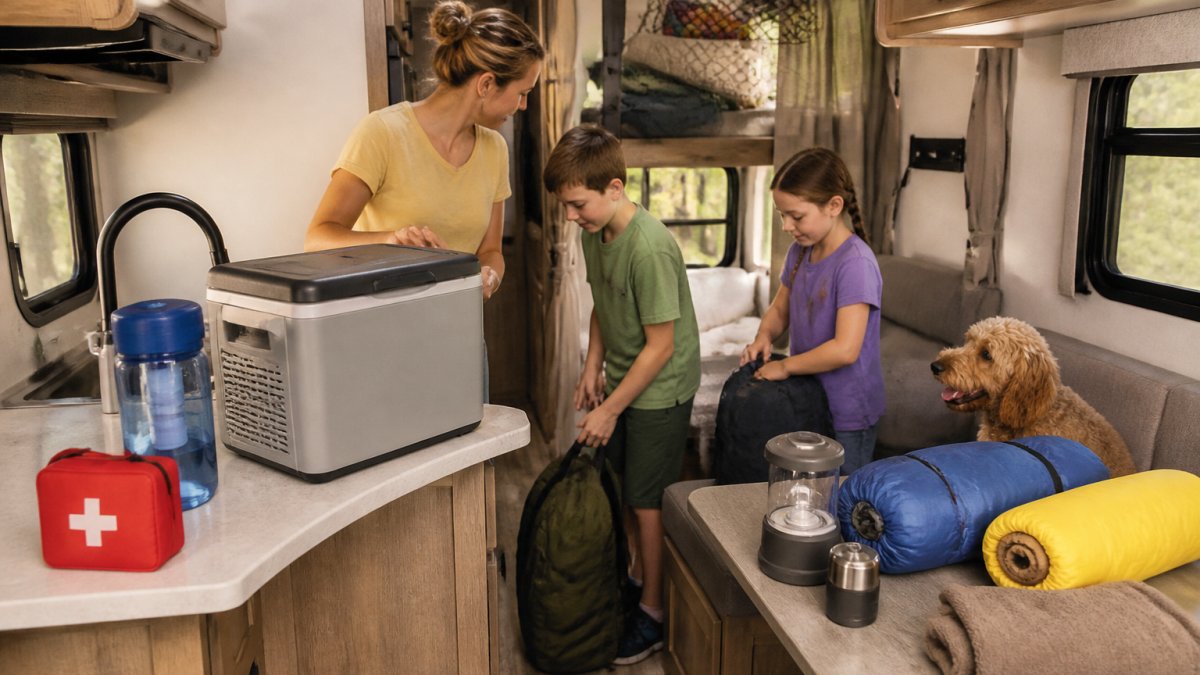
Cooking Equipment and Kitchen Tools That Fit a Small Galley
Galley space is measured in inches, so every tool must earn its spot. A two-burner camp stove, nesting pot set, collapsible dishpan, and a good knife cover most meals.
For food storage, a 12-volt portable refrigerator beats a cooler for trips longer than a weekend. The USDA FoodSafety.gov guidance on food storage is worth reviewing before you pack perishables for a multi-day trip.
Sleeping Necessities and Bathroom Supplies for Four or More
Sleeping gear for a family of four means bunk bedding, not one big bed. Measure your bunks before buying sheets, RV mattress sizes rarely match residential standards.
For bathroom supplies, keep it minimal and sealed. RV toilets use little water, so use RV-specific toilet paper that breaks down quickly. Pack a small caddy per person and a hanging toiletry bag to save counter space.
Two-Pack RV Inline Water Filters with Flexible Hose Protector →
| Category | Must-Have Item | Why It Matters |
|---|---|---|
| Kitchen | 12V portable refrigerator | Holds safe temps on long trips |
| Kitchen | Nesting cookware set | Fits cabinets that never close |
| Sleeping | Bunk-sized bedding | Standard sheets do not fit |
| Bathroom | RV-safe toilet paper | Prevents tank clogs |
| Bathroom | Per-person caddy | Keeps counters clear |
RV Gear for Kids: Packing by Age and Trip Length
Packing for kids by age beats guesswork: a toddler's list looks nothing like a ten-year-old's, and a weekend list nothing like two weeks. Build it in two passes, first by age, then by trip length.
Packing by Age
Toddlers and preschoolers (2-5): Safety and sleep come first: a travel cot or bunk rail, a familiar blanket and lovey, and quiet toys for rainy afternoons.
Young kids (6-12): Outdoor activity gear earns its space, bikes or scooters where allowed, a bug jar, cards, and a headlamp each.
Teens: Charging cables, headphones, and their own storage bin. A power bank keeps devices alive when the house battery is low.
Packing by Trip Length
Trip length changes the math more than age. A weekend needs one outfit per day plus a spare; two weeks needs laundry capability or a campground with a washer and dryer.
Rule of thumb: under four days, pack per-day; over a week, pack for four days and plan laundry. That cuts clothing volume roughly in half and frees cabinet space for gear that matters.
Budget and Weight Trade-Offs
Kids' gear is where overpacking happens fastest, and every pound eats into payload. Weigh your rig loaded, not empty, before buying anything bulky. Trade-offs worth knowing:
- Bikes vs. scooters: Bikes are heavier and need a rack, but they cover more ground. Scooters are lighter and store flat.
- Full bedding vs. sleeping bags: Bunk-sized sheets are comfortable but bulky. Sleeping bags compress and double as a blanket on cold nights.
- Toys vs. activities: A few open-ended items (blocks, cards, a ball) beat a bin of single-use toys every time.
On a budget, spend first on sleep and safety for the youngest, then activities for older kids. The fun stuff can wait for trip two.
RV Type and Compatibility Notes
What you pack depends on what you drive. A travel trailer usually has more bunk space but less payload than a motorhome, so weight discipline matters more.
Check your rig's cargo carrying capacity (CCC) sticker before loading, usually inside a cabinet door or on the driver's side door jamb. Close to the limit? Leave the bikes and bring scooters.
Power, Leveling and Outdoor Comfort Gear for Families
Power and leveling gear keeps the trailer stable and the lights on; outdoor comfort gear makes the campsite feel like a destination instead of a parking spot.
For power, a 50W solar kit with a charge controller maintains your house battery between hookups, and a portable power station runs small devices without draining the RV battery.

For leveling, carry stackable blocks and wheel chocks for every wheel; a tire leveler helps on sloped sites.
How to Prioritize Essential RV Gear for Families on a Budget
Budget prioritization comes down to one rule: safety and hookup gear first, comfort gear last. You can camp without string lights; you cannot camp safely without a surge protector and chocks.
Spend in this order:
- Safety and hookup basics: extinguisher, detectors, water hose, regulator, sewer hose, surge protector, chocks
- Sleep and food: bedding sized to your bunks, a working fridge or cooler, basic cookware
- Power: battery maintenance first, solar or a power station second
- Comfort and fun: chairs, tables, lights, fire pit
Weight matters as much as budget. Every pound you add eats into your payload and your fuel economy. Weigh your rig loaded, not empty, before you buy anything bulky.
This is where FieldToStream's approach helps.
Buy the boring gear first. Chocks, regulators, and surge protectors are unglamorous and non-negotiable. The fun stuff can wait for trip two.
Every family RV trip starts with the same challenge: figuring out what you actually need before you leave the driveway, not after you arrive at the campground. FieldToStream is a veteran-owned small business that equips RV families with practical, high-quality gear, from inline water filters and portable power stations to first-aid kits sized for real trips.

Frequently Asked Questions
What gear does a family need for an RV trip?
At minimum, pack a drinking water hose with a water pressure regulator, a sewer hose kit, a surge protector, leveling blocks and wheel chocks, a first-aid kit, and a portable power station for charging phones and lights. Add a portable refrigerator, basic kitchen tools, and bedding for each sleeper. Families with kids should also carry safety gear like a fire extinguisher, emergency blanket, and a stocked first-aid kit. Build your list around your RV type, trip length, and how many people and pets are traveling.
What safety gear should families keep in an RV?
RV safety gear for families should include a 173-piece first-aid kit, a fire extinguisher rated for your rig, a carbon monoxide and propane detector, an emergency blanket, and a basic tool kit. For kids, add a door alarm or child lock, a small flashlight for each child, and a written emergency contact card. Check that your first-aid kit contents are complete, replace expired items, and add any personal medications your family needs before every trip.
How do you organize storage in a family RV?
Start by assigning one bin or drawer per person and labeling everything. Use collapsible bins for clothes and stackable containers for kitchen tools. Hang a shoe organizer on the bathroom door for toiletries, and use over-the-door racks for kids' books and small toys. Keep heavier items low and near the axles. Before each trip, do a five-minute departure check to confirm cabinets are latched and nothing is loose on counters.
What should you pack for kids on an RV camping trip?
Pack by age and trip length. Toddlers need a portable crib or travel bed, a few familiar comfort items, and outlet covers. School-age kids do well with books, card games, a flashlight, and one outdoor activity like a frisbee or fishing rod. Teens often want their own charging brick and headphones. For a weekend trip, two outfits per child plus one extra set works for most families. For longer trips, plan a laundry day every four to five days.
What kitchen essentials should you bring in an RV?
A portable refrigerator like the VEVOR 37-quart dual-zone model keeps food cold on 12V or 110V power. Add a two-burner camp stove or use your RV range, a nesting cookware set, a cutting board, a can opener, and a small set of utensils for each person. Bring a collapsible dishpan and a drain board that fits your sink. For water taste, an inline RV water filter reduces chlorine and sediment at the campground spigot.
What should you pack for a weekend RV trip?
For a weekend trip, pack two outfits per person plus one extra set for kids, a small toiletry bag per adult, and one bin of dry goods for meals. Bring your water filter, sewer hose, leveling blocks, and a portable power station for charging devices. Add a first-aid kit and any medications. Keep a printed checklist in the RV so you can restock quickly after each trip instead of rebuilding the list from scratch.
Sample Block Quote
Praesent vestibulum congue tellus at fringilla. Curabitur vitae semper sem, eu convallis est. Cras felis nunc commodo loremous convallis vitae interdum non nisl. Maecenas ac est sit amet augue pharetra convallis nec danos.
Sample Paragraph Text
Praesent vestibulum congue tellus at fringilla. Curabitur vitae semper sem, eu convallis est. Cras felis nunc commodo eu convallis vitae interdum non nisl. Maecenas ac est sit amet augue pharetra convallis nec danos dui.
Cras suscipit quam et turpis eleifend vitae malesuada magna congue. Damus id ullamcorper neque. Sed vitae mi a mi pretium aliquet ac sed elitos. Pellentesque nulla eros accumsan quis justo at tincidunt lobortis denimes loremous. Suspendisse vestibulum lectus in lectus volutpat, ut dapibus purus pulvinar. Vestibulum sit amet auctor ipsum.
